

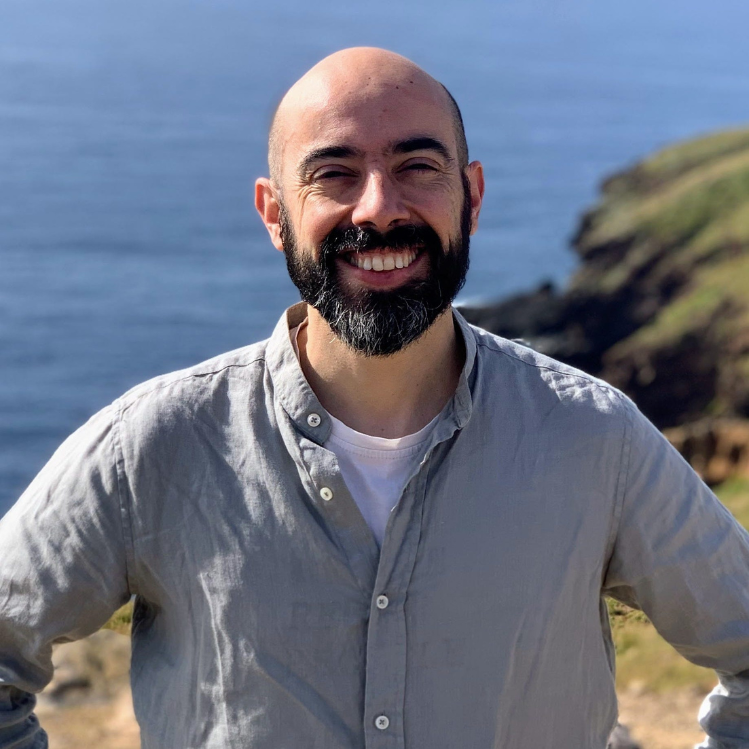
Hugo Pacheco works at the intersection of cash, trust, and financial infrastructure in African markets. Rather than focusing on apps or digital-first solutions, his work centers on how people already manage money and how financial systems can be built around those realities. By embedding financial services into everyday businesses and community structures, he has helped expand access to payments, savings, and banking services in markets long underserved by traditional banks.
“Financial inclusion starts not with technology, but with understanding how people already trust and use money.”
Can you share a project where you helped bring financial services to people who didn’t have access before?
One example comes from Ethiopia, where I helped design a women-led mobile money agent network using existing small businesses rather than bank branches. These women were already trusted in their communities and handled cash daily, but had no way to offer formal financial services.
By enabling them to act as agents, people could deposit, withdraw, and transfer money locally for the first time. Within six months, the network reached more than 3,000 previously unserved users. The impact came less from technology and more from embedding financial access into familiar, trusted places.
How do you make sure financial solutions are both helpful to communities and sustainable for businesses?
I design for real economic behavior rather than idealized users.
For communities, that means reducing the time, distance, and risk involved in managing money. For businesses, it means ensuring agents earn predictable income and that operations can scale without permanent subsidies. If agents cannot make money, services become unreliable. If services are unreliable, customers disengage.
In practice, sustainability and inclusion are inseparable. A solution that does not work commercially will eventually fail the people it aims to serve.
In places where people trust cash more than digital money, how do you get them to try digital payments?
You do not reduce cash usage to grow digital money. In most cases, cash volumes need to increase first.
Digital adoption depends on people being able to move reliably between cash and digital value. In markets like Mozambique, DRC, and Nigeria, uptake only accelerated once agents consistently had enough cash to meet demand. When withdrawals or deposits fail, trust in the digital system breaks down.
If cash availability is ignored, digital services become exclusionary, benefiting only people with stable income, smartphones, or bank access. When cash is properly supported through agents, digital money becomes a bridge rather than a barrier.
How do agent networks or agency banking help people get access to money and financial services?
Agent networks bring financial services into places people already use, such as shops, kiosks, and markets.
Mobile money agents typically provide access to fintech/telecom-led wallet top-ups and payments. In contrast, agency banking agents act on behalf of banks to offer deposits, withdrawals, and account services. In both cases, agents reduce the need for costly bank branches and make services available closer to where people live and work.
For many first-time users, agents are their only interaction with formal finance. They provide access, explanation, and confidence, especially in environments where trust in institutions is low.
What are some common challenges when building agent networks, and how do you solve them?
The most common challenges are cash shortages, inactive agents, and low earnings.
Agents struggle when they cannot meet customer demand or when commissions are too small to justify the effort. I address this by redesigning incentives, improving access to working capital, and segmenting agents based on their capacity and role in the network.
Successful networks treat agents as small businesses that need predictable income and liquidity, not as passive distribution points.
How do you work with regulations while still bringing new financial products to market?
I design products to align with regulatory intent while solving real operational problems.
In Mozambique, I worked on mobile money and agent systems with Mpesa and Vodacom under a tightly regulated environment. Instead of pushing rapid expansion, we focused on compliant agent onboarding, clear transaction limits, and strong identity processes. This allowed the network to scale nationally without regulatory backlash, while maintaining trust with both users and authorities.
In Nigeria, I worked on the expansion of the BVN national identity system. The challenge was increasing coverage without raising costs or excluding low-income users. By redesigning enrolment workflows and distribution models, identity coverage grew from roughly 29 million to over 60 million people in a few years.
In both cases, regulation was not a blocker. It provided the framework that made scale possible once operational realities were respected.
Can you tell us about a partnership that made a big difference in your Work?
One impactful example comes from my work with Advans Microfinance across multiple countries, including Ghana, Côte d’Ivoire, Tunisia, Senegal, and Cameroon.
I coordinated the rollout of digital field teller systems where deposit-taking and loan origination rules differed significantly by country due to regulatory and operational constraints. Beyond technology, this required aligning workflows with local regulation and frontline realities.
In Côte d’Ivoire, I also helped set up an agency banking model in partnership with cocoa farmer cooperatives. These cooperatives acted as aggregators, consolidating demand in rural areas where individual agents would not have been viable on their own. The partnership worked because each party had a clear role: the bank managed risk and products, cooperatives managed trust and aggregation, and the platform enabled operations via USSD.
How do you make sure your projects actually empower local communities, not just grow a business?
I look at long-term behavior rather than launch metrics.
If agents earn stable income, customers continue using services without incentives, and systems still function after pilots end, then communities are being empowered. If usage drops once external support is removed, the model was not sustainable.
True empowerment shows up in daily habits and income stability, not press releases.
What do you see as the next big change in fintech and financial inclusion in Africa?
The next shift will be away from growth driven by agent numbers toward systems focused on agent quality, liquidity, and productivity.
We will also see more hybrid models that treat cash as permanent infrastructure rather than a temporary problem. Fintechs that understand cash flows, identity, and regulation together will outperform those chasing purely digital scale.
The future is less about new apps and more about stronger financial plumbing and resilience.
How does your platform, The Barefoot Economist, help people understand and improve financial access?
Through a weekly newsletter and The Agent Network OS, it focuses on how agent-led financial systems actually work in cash-heavy, low-trust markets. Rather than promoting products or trends, it explains why certain business models scale and others fail, drawing on real operational, regulatory, and economic constraints.
The aim is not theory, but better decisions in real financial systems.