

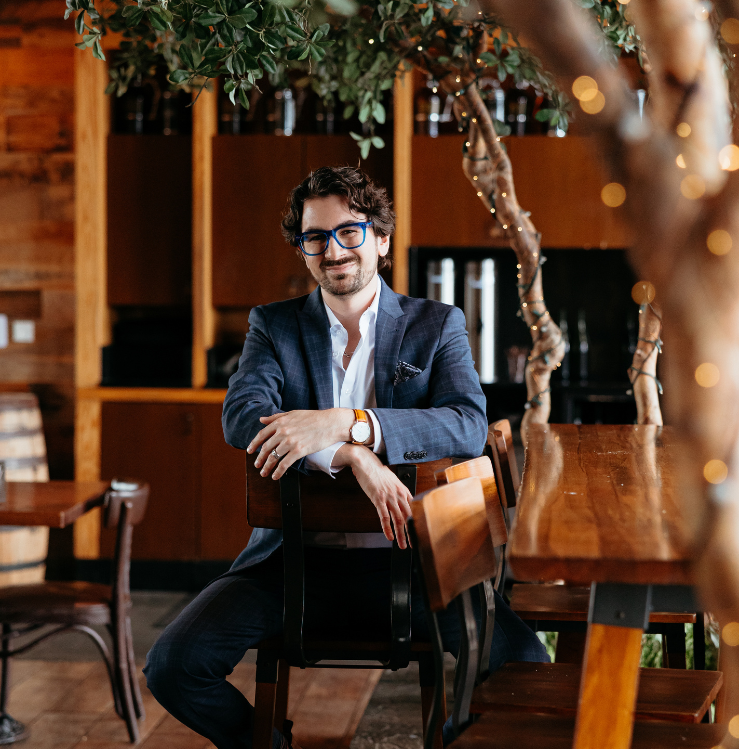
Brian Miller turned a lifelong passion for magic into a career that goes far beyond illusions. What started as performing tricks on stage became a profound study of human connection, communication, and trust. From thousands of performances across five continents to a viral TEDx talk, Miller has honed the art of making every interaction meaningful — whether on stage, in business, or in everyday life. His journey shows that success isn’t just about skill or knowledge; it’s about presence, empathy, and understanding the people you serve.
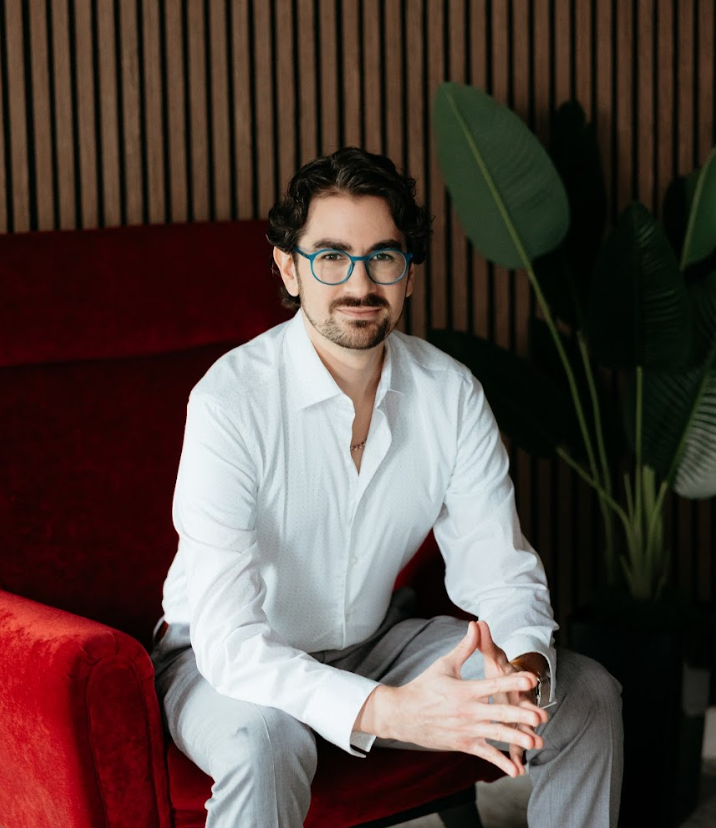
What made you leave a PhD in philosophy to become a magician and speaker?
I was never quite a PhD student, although I was accepted into a doctoral program in philosophy to study metaphysics. As I was staring down seven more years in the ivory tower, I had a moment of clarity: I’d been performing as a professional magician since I was 16, traveling on nights and weekends throughout college, writing papers in hotel rooms. And it looked like I might actually have a chance to make it. That’s incredibly rare. So few aspiring magicians, comedians, musicians ever get that window, and I thought, “I don’t want to get to the end of my life wondering if I could have done it.”
So I turned down the PhD offer and gave myself two years. And I meant it seriously: no fallback jobs, no part-time work. I knew myself well enough to know that if I had a safety net, I wouldn’t have the hunger I needed. At the two-year mark, I was still struggling. Incredibly thin, not eating well, ready to admit defeat. I reapplied to grad schools, bracing myself to tell my dad he’d been right all along. But while I was waiting to find out, I caught a couple of lucky breaks, gained some momentum, and, before even hearing back, decided to continue with my magic career.
Eventually it worked. I started touring the country. I’ve given thousands of performances as a magician across five continents. A few years later, I was invited to give a TEDx talk about my journey as a magician. That talk went viral, launched my speaking career, and the rest is history.
You say every interaction matters. How do you practice that in everyday life?
We’re in a loneliness epidemic. Depending on which report you read, upwards of 60% of Americans feel lonely or isolated on a regular basis. That means roughly three out of every five people you encounter are starving for connection—they just don’t know how to ask for it or where to find it. That puts something on the rest of us: to offer the gift of connection at every opportunity we get.
And it is a gift. You offer it, and if someone accepts it, wonderful. If they don’t, that’s about them. All you can control is your intentions, not the outcomes.
While I’m certainly not perfect, in every interaction I have I try to show up as if to say, “This is the most important thing to me right now.” You can do that with the barista taking your coffee order in 20 seconds. Connection doesn’t require a long conversation. It just requires focused effort and a bit of practice.
How did being a magician help you connect with people in your work?
Magic is a fundamentally antagonistic art form. At its core, it’s “I know something you don’t know”—a schoolyard taunt come to life. There’s no logical reason people should enjoy it. It’s built on lies and deception. And yet great magicians find a way to bridge the gap between what they know and what the audience isn’t allowed to know, and create something extraordinary in the middle, where everybody leaves uplifted, transformed.
The real job of being a magician isn’t tricking people. It’s connecting with them. Over a decade of performing, across thousands of performances on five continents and in all kinds of cultures, I learned how to make instant, meaningful connections with strangers in the most trying of environments.
What I took away from all of that was the ability to understand different perspectives. To see people, recognize where they’re coming from, and navigate the gap between what I know and what they don’t, and what they know and what I don’t. When I brought that skill off the stage and into my professional and personal relationships, it completely transformed my life.
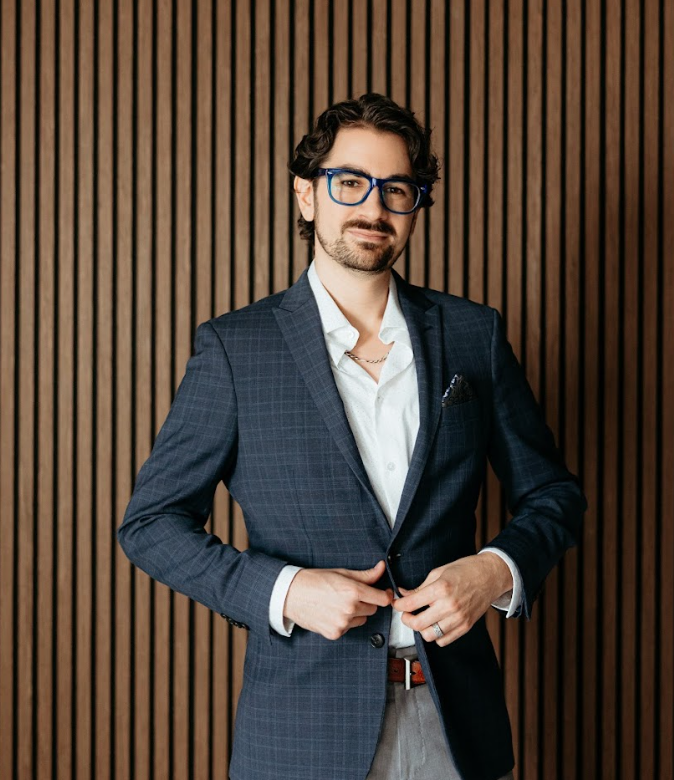
Your TEDx talk has millions of views. Why do you think it connects with so many people?
I’ve had just over a decade to think about that question. A lot of it comes down to timing. The talk dropped in 2015, right as we were starting to hear the first rumblings about loneliness, right as the political climate was becoming the most divisive of my lifetime, right as the world was accelerating into social media, smartphones, and algorithmic silos. It was the tipping point of the world we now live in. Growing up in the late 80s and early 90s, there was a hopeful vibe. People looked out for each other, division wasn’t part of ordinary conversation. By 2015, everything was starting to feel really bleak, and I think people were genuinely frustrated by it.
The talk itself wasn’t groundbreaking. I talked about listening to understand, asking meaningful and relevant questions, and gave a simple framework for doing both. None of that is new. But because it landed at exactly the right moment in the culture, and because I approached it not like an academic on communication but like a professional magician who just happens to have learned some things along the way. Clearly it struck a chord, and then it took off.
Many experts struggle to explain big ideas. What’s the biggest mistake you see, and how do you help them?
The biggest mistake experts make, by far, is starting with the wrong question. Most people begin their planning by asking, “What do I want to say?” They have 20 minutes or an hour, and they think: what do I want to tell these people about my topic? So they get excited and they unload, going on about the research, the data, the studies, the statistics, everything they wish the world knew about how fascinating their work is. And they completely overwhelm their audience.
The problem is that people don’t have the context to understand what you’re talking about, why it’s interesting, or why it’s relevant to them. You’ve essentially walked into a conversation that only you were invited to.
Instead of asking “What do I want to say?” you should always begin by asking “What do they need to hear?” Who are these people? What do they want? What are they struggling with? What do they believe, and what do they fear? How do I meet them where they are? The best communicators don’t start with their ideas. They start with their audience, and build up from something the audience already holds to be true, before ever asking them to consider something new.
In your book Three New People, you talk about daily interactions. Can you share a small interaction that had a big impact on you?
I was rushing through an airport on no sleep, delayed by a mechanical issue that had turned my leisurely layover into a 25-minute sprint to my gate. No phone out, no earbuds in. Just me scanning for my gate so I could make it to a speaking engagement. And then I see this short bald guy walking toward me, and my sleep-deprived brain goes, “That short bald guy kind of looks like Seth Godin.” The closer he gets, the more certain I become. It is Seth Godin. The father of modern marketing. My hero in business. A guy whose books have genuinely changed my life.
I had no filter. I just blurted out, “Seth!” He found where the voice was coming from, spotted me, broke into a big smile, made a beeline for me, stuck out his hand and said, “What can I do for you, sir?”
That’s how my hero became a cherished personal connection.
Here’s what stuck with me: everybody is stressed in airports. Seth was traveling with his wife, almost certainly heading somewhere important. And yet this man—one of the most recognized names and faces in modern business—stopped completely, gave me his full attention, and didn’t rush me for a second. I thought: if Seth Godin can find time for a stranger in an airport, I have no excuse. It completely reframed how I think about the moments when I’m tempted to put my head down and tell myself I’m too busy to connect.
What’s next for you in your mission to help people connect better?
I’m on a mission to restore humanity’s trust in experts. We are in a trust recession. Trust is at historic lows across almost every conceivable industry—education, healthcare, politics, you name it. We don’t even trust each other. Only one in three Americans says that most people can be trusted. That’s a staggering number.
Accompanying this collapse in trust is what some are calling the “death of expertise.” We no longer look to experts for answers. In fact, as a culture, we’ve become actively skeptical of them. The more letters after your name, the more degrees you have, the longer you’ve studied something, the less likely people are to trust you. That’s a complete reversal from where we were half a century ago. And it’s a serious problem. Experts aren’t always right, of course not—but they are far more likely to be right, and more likely to be right in ways that non-experts haven’t even considered.
Here’s what I think is happening: non-experts have figured out something that most experts haven’t. The name of the game is no longer knowledge. It’s trust. If someone with a YouTube channel or a TikTok account can figure out how to earn trust, they will spread ideas through the culture. Even if they’re wrong. Meanwhile, experts are still stuck in the ivory tower, publishing for each other, speaking in jargon, wondering why nobody’s listening. Until they learn to speak clearly, earn buy-in, and drive action on their ideas, they’re going to keep losing ground. And as a society, we are paying a real price for that.
My work is about closing that gap. I’m on a mission to help smart people explain their ideas to the rest of us. To earn the trust they deserve, and drive real change on ideas that matter.
Your new book is called The One-Page Keynote. What does that even mean?
Most experts, when tasked with presenting their work—particularly in keynote-style environments, 20 to 60 minutes on stage or in front of a room—tend to think the success of their presentation comes down to charisma or performance skills. And because they’re not “naturally talented speakers,” they expect to fail. In this book, I argue that design beats delivery every time. It’s not the speaker, it’s the speech. If you design the speech properly, by working backwards from who it’s for and asking “What do they need to hear?”, you will drive action on your big ideas. No charisma required.
The book teaches you how to design an entire keynote-length speech that can be outlined clearly on a single typed piece of paper. Something you could actually walk up on stage and reference. The goal is to ensure you’re presenting the right ideas in the right order.
And here’s the big secret at the heart of the book: the speech structure I teach—the one we’ve used with all of our clients and that I use in my own presentations—is built on answering the eight questions that every audience silently asks themselves while you’re on stage. If you simply answer those questions in the order they ask them, your speech will work. Every time. For any audience, on any topic.
When you trust the system, you trust yourself. And when you trust yourself, your audience will trust you.
The One-Page Keynote: How to Design a Speech That Always Works, No Charisma Required will be released May 2026 (Rethink Press).