Featured Man – Page 2 – Global Man

Jason Graystone: How I Built Unstoppable Wealth and Freedom

Jason Graystone is not just a globally recognized entrepreneur—he’s a beacon of financial freedom. From launching his first business at 22 to building multiple 7-figure companies by 30, Jason’s journey is one of relentless determination and strategic investing. Today, he stands as a thought leader in the world of wealth creation, empowering thousands to break free from the chains of financial limitation. In this article, Jason shares his powerful insights on how to build unstoppable wealth and achieve the true freedom that many only dream of.

How did you manage to achieve financial independence by 30? What were the key steps?

Firstly, mental leverage. I found out I was going to be a dad at 23, and that fueled a quest for security that I wanted to provide for my family. I had a lack of security as a child and didn’t want that for my son.

I learned early that real wealth isn’t just about money, it’s about control.

I focused on building income streams that didn’t depend on my time. I mastered money management, built assets, and lived well below my means.

I automated savings to remove emotional decision-making, invested religiously every month, and treated financial freedom like a mathematical equation, because it is.

Many people chase more income but never measure how much time they’re buying.

I obsessed over that. When you value your time more than your money, you end up with plenty of both.

When you started your first business, did you ever imagine reaching this level of success? What motivated you to keep going?

No, not at all. I just knew I couldn’t live a life where I was told what I was worth.

The motivation wasn’t money, it was autonomy, mobility and flexibility.

I had a clear vision of the life I wanted to live: freedom of mind, movement, and money. That vision pulled me through every tough moment. I wasn’t motivated by the goal; I was committed to the process. Must have been the engineering brain in me!

You’ve built several successful businesses. What’s the most important thing to keep in mind when scaling a business?

Don’t scale chaos. A business must be built on systems, not stress.

If your business doesn’t serve your ideal lifestyle, you’ve just built another job.

Delegate the uninspiring tasks, automate what you can, and make sure everything aligns with your values.

If it doesn’t feel like a natural extension of who you are, it’s not scalable in a meaningful way, and you will face burnout like many do.


How do you personally define financial freedom, and why is it important?

Financial freedom is the ability to stop, not the obligation to keep going.

It’s having your lifestyle funded by assets, not effort.

For me, it’s about time, how many years of life you’ve already bought in advance. It matters because when you remove money stress, you show up better in every area: relationships, creativity, health, and leadership. You’re no longer surviving; you’re living.

You’ve talked about combining active income, investing, and business systems. How do these elements work together to build wealth?

They’re the three legs of the freedom tripod. Active income is the launchpad; it gets the cash flowing. There is only one way to get money, and that is for another human being to give it to you. This also provides fulfilment.

There are two ways to get it from them: a competitive environment like a sport where there is a winner and a loser, or to serve them and they pay you for a fair exchange.

Serving people is the easiest way to accumulate money.

Business systems then free up your time and scale impact.

Investing compounds the results and future-proofs your wealth.

Most people rely too heavily on one and wonder why they’re stuck.

You need all three working in harmony if you want to be Always Free.

What advice would you give to someone just starting in trading or investing?

Stop looking for the shortcut and start building the skillset.

Trading isn’t about predicting the market; it’s about managing yourself.

You’re not just trading charts, you’re trading your beliefs, your fears, your discipline. Master yourself, master the process, and let time do the rest.

The market rewards consistency, not excitement.

If you are looking to start investing, start by allocating your funds proportionately to your knowledge on the investment.

If it keeps you up at night, you have put too much in, or you don’t understand enough about it. 

What common mistakes do new traders make, and how can they avoid them?

They chase freedom but trade from fear.

They focus on the outcome instead of the process.

They risk too much, learn too little, and expect too fast.

The solution is to slow down, get coached, journal every decision, and build a strategy that suits their personality.

The market doesn’t care about your goals; it rewards patience, precision, and process.

How has working with experts like Dr. Brett Steenbarger shaped your approach to trading?

Brett helped me understand that trading is less about strategy and more about state. He taught me to track emotional triggers, build mental resilience, and cultivate self-awareness. It’s not about suppressing emotions; it’s about understanding them and making decisions in alignment with your higher self. That changed everything.

How do you choose topics for your YouTube videos and podcasts to have the most impact?

I reverse engineer the content from the conversations I’m having daily, with entrepreneurs, with traders, with people stuck in a rut.

I speak to the problem they feel but can’t articulate.

I don’t make content for views; I make content for impact.

If it doesn’t move someone to action or give them clarity, I don’t publish it.

What’s one thing people should know if they want to succeed in business and building wealth?

It’s not one thing.

That’s the truth most people don’t want to hear.

Wealth is a ratio of many moving parts: values, vision, systems, psychology, income, liquidity, and lifestyle.

Ignore one, and the others suffer.

Success doesn’t come from one action; it comes from alignment.

Align who you are with what you do and how you earn, and you’ll never be stuck again.

I have a test you can take to score yourself on these things: https://alwaysfree.com/freedomtest


From Baghdad to the House of Lords—via the Moon: The Unscripted Path of Oscar Wendel

At the Intersection of Culture, Capital, and Diplomacy: Global Stratalogues’ Pursuit of Purpose Beyond Ambition

Oscar Wendel is no stranger to bold ideas. From co-founding a lunar-dust cooling initiative to moderating high-level roundtables on the future of digital finance, he has built a career at the intersection of strategy and imagination. As the founder of Global Stratalogues—a forum and think tank launched in 2024—Oscar curates off-the-record dialogues that bridge sectors and disciplines.

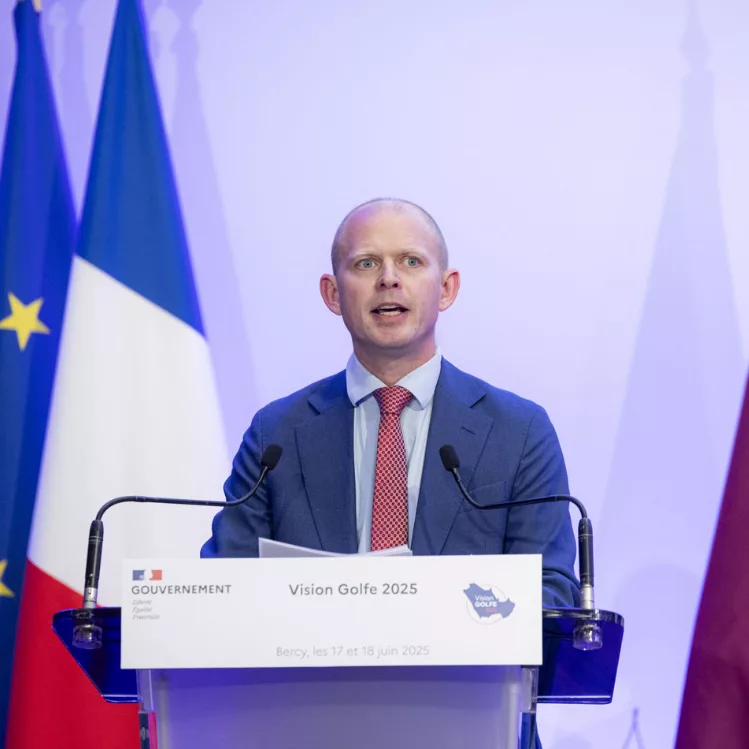
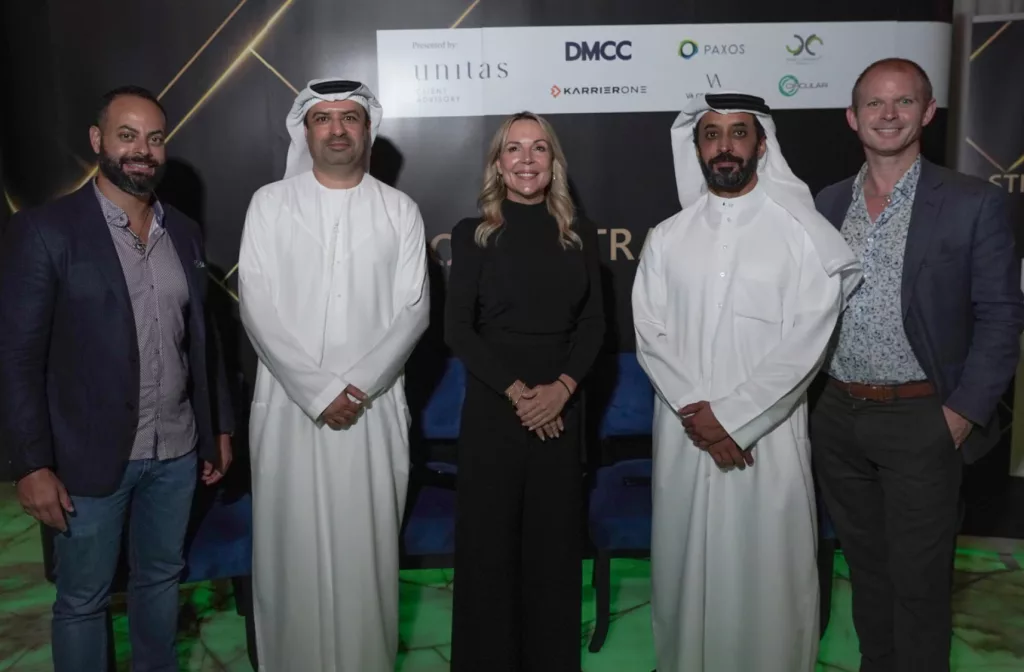
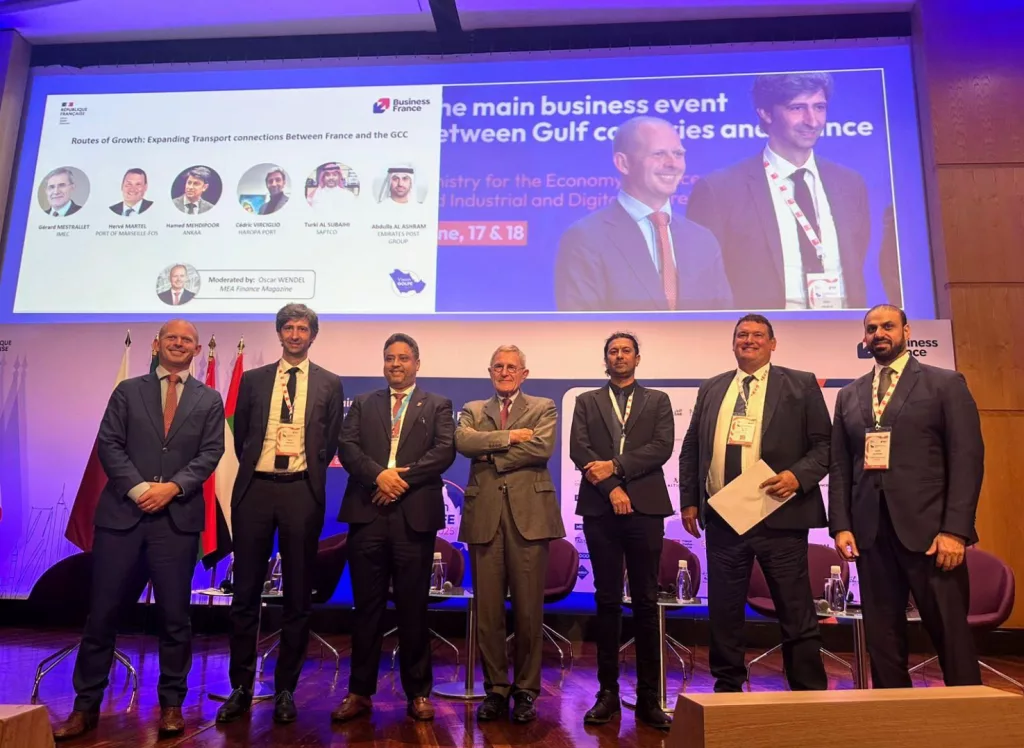
Global Stratalogues has hosted roundtables at the UK Parliament’s House of Lords, alongside the World Economic Forum in Davos, with the Qatar Financial Center at the Qatar Economic Forum, at the Venice Biennale with the Saudi Ministry of Culture, and in partnership with the French Ministry of Economy’s Vision Golfe Summit in Paris. It has become a trusted platform for meaningful exchange between industry leaders, policymakers, and academics.

In this exclusive interview with Global Man, Oscar reflects on the power of curiosity, what reporting from conflict zones taught him about infrastructure, and why the most transformative conversations happen when the stage—and the ego—is set aside.

What inspired you to start Global Stratalogues, and what makes those roundtable conversations so powerful?


Global Stratalogues began with a simple insight: the most meaningful conversations often happen offstage, over dinner, between people who’d never otherwise meet. While running large conferences at Dubai World Trade Centre, I organized small, agenda-free dinners for my favorite 20 to 30 speakers. These dinners—unstructured, personal, and agenda-free—sparked something rare: people speaking not as company representatives, but as themselves.

After leaving this position, I wanted to preserve and build on that spirit. That’s how Global Stratalogues came to life—an independent forum and think tank designed to convene remarkable individuals from across sectors for open, non-commercial dialogue. What makes these roundtables powerful is exactly that openness. We don’t choreograph the conversation too tightly. By allowing people to speak candidly, without pushing a brand or a pitch, we create an atmosphere where unexpected insights emerge and new partnerships are born. When the right people share the same room, the conversation takes care of itself.


You’ve worked across journalism, events, and leadership platforms—what connects all these experiences for you?


At the core of everything I do—whether it’s reporting from conflict zones, curating global conferences, or hosting leadership forums—is a drive to bring people together around ideas that matter. Journalism taught me to listen deeply and find meaning in complexity. Event programming taught me how to shape environments that make people feel safe to share bold ideas. And Global Stratalogues brings it all together: it’s about curating not just content, but chemistry.

What was it like reporting from conflict zones like Iraq and Afghanistan? How did it shape your perspective today?


I wasn’t embedded with military units, but was reporting on industrial operations in some of the most complex and high-risk regions of the Middle East. The trips I made to Baghdad, Basra, and Kabul required meticulous planning, down to the hour. I travelled with logistics operators in Basra who had armored their trucks not just to protect goods, but to ensure supply chains could keep flowing even amid attacks. In Baghdad, entrepreneurs were reestablishing truck dealerships in areas while urban warfare and roadside bombs were a common occurrence. These were stories of determination to build something amid chaos.

That experience fundamentally reshaped my understanding of what “infrastructure” really means. It’s not just about roads and ports—it’s about trust, relationships, and the invisible threads of human coordination that keep fragile environments functioning. It’s also why I approach business and trade through a deeply human lens today. I’ve seen firsthand that resilience isn’t just a system—it’s a living organism, sustained by people coming together to make it work.

You’ve taken on big projects like worker rights and fire safety—what drives you to tackle these complex challenges?

I’m drawn to the blind spots that are inconvenient to talk about but too important to ignore. I think we all believe that we are on the side of truth and justice. Reaching a common understanding of what that is requires there to be open lines of communication between stakeholders to see eye to eye on what the reality on the ground is. When I first moved to Dubai in 2008, I launched the conference division of the magazines Construction Week and Arabian Business. It was in the midst of the building boom, and there was a significant global spotlight on worker safety and welfare. The first conference I produced was under the patronage of the UAE Ministry of Labour, convening international organizations such as the Human Rights Watch, the International Labour Organization (ILO), and the American labour union AFL-CIO. They met with regional construction contractors and diplomatic representatives from the sending countries of labourers. The discussions were very constructive, and many misunderstandings were cleared up, as well as new initiatives that took shape, including the midday work ban for labourers in the summer months. Years later, after a series of high-rise fires, I collaborated with Civil Defense authorities across the Gulf to raise fire safety standards. These projects matter because they change lives.

Tell us about the moment you realized the power of combining creativity with strategy—was there a turning point?

Absolutely. During my time at the Dubai World Trade Centre, I launched the Creative Economy program at GITEX, bringing together authors, artists, and philosophers. The conversations moved beyond the benefits of products and services to explore the deeper, intrinsic value of innovation. By placing creativity at the core, I came to see it as the most potent strategy for unlocking technology’s true potential—to serve people in meaningful, human-centered ways.

At the Qatar Economic Forum, your roundtable with the Qatar Financial Center focused on tokenization of real-world assets. What excites you about this digital asset world?

Fractional ownership unlocks global liquidity and participation. What excites me is the convergence of compliance, capital, and code—it’s reshaping how new value is created and accessed.

With Qatar aiming to tokenize major properties—skyscrapers worth over $500 million—what challenges and opportunities do you see in bringing these conversations to life?

The opportunity is clear: increased transparency, liquidity, and cross-border investment. The challenge lies in regulation, interoperability, and education. These are not just tech conversations—they’re legal, political, and cultural. That’s why roundtables like ours matter. We’re not just showcasing use cases—we’re designing the governance models needed to scale them.

You’ve made bold moves with ASTROCOOL and the Intraplanetary National Anthem. How do you take a creative idea and turn it into global impact?

Creative ideas become impactful when they are shared, supported, and strategically staged. Start with a bold vision, bring the right people together, and find the right stage. Impact comes from cross-sector collaboration, global platforms like COP and the UN, and a strong story with a clear call to action.

Both projects you mention are outlandish in a literal sense. Astrocool is a research project that I co-founded, proposing a lunar-dust solar-shield concept to cool our planet. David Chaum and I focused on the scientific backbone and showcased the idea at the hundred-year-old Deutsches Museum in Munich, the largest science museum in the world. 

The idea for the Intraplanetary National Anthem came to me on the spur of the moment after being invited to speak at a COP28 press conference with a day’s notice. I asked my friend Fernando Garibay, the Grammy-winning producer behind Lady Gaga’s Born This Way, to join me on stage to unveil a project we dubbed a “Salute and Celebration to All Mankind.” In the video, you’ll notice how nervous I am. It was a surreal feeling to announce something as unconventional on a UN stage, and I was worried about getting in trouble or bursting out laughing. Afterwards, with the response it received, I realised what a powerful idea it is to create a unifying project celebrating humanity through music. Immediately after the press conference, the team behind placing the first art installation on the moon, Jeff Koons’ Moon Phases, invited me to their launch at Cape Canaveral the next month to discuss potential collaboration. The project is growing in ambition, and work is ongoing with an orchestra in Venice.

How do you bring people from government, business, and culture together to have honest, meaningful talks?

You design for trust and dialogue based on a shared sense of intellectual curiosity. No stages, egos, hierarchies, or experts speaking down to an audience asking questions. It’s not about status, it’s about insight and openness without self-aggrandizing sales and promotion. This means curating the guest list with discrimination. The quality of an event is as much about who is not there as it is about who is. 

Finally, it’s asking questions that have no clear answers. Finding new paths towards insights requires the intersection of perspectives. The most boring thing in the world is gathering like-minded individuals. This often leads to entrenched views and groupthink, perpetuating the status quo.


You’ve written under a different name and published a book praised by Forbes. What made you take that route, and what do you hope readers take away?

Oscar Wilde said, ‘Give him a mask, and he will tell you the truth.’ Writing under a pseudonym gave me the freedom to speak openly about uncomfortable truths. The book ‘Bargepole Management’ described strategies to establish and exploit inequalities across organizations to the advantage of a minority. While seen as quite offensive to many, it was written to unveil the Realpolitik of management in large organizations. 

Oscar Wendel 

Press Conference
Watch on YouTube

With David Chaum and Fernando Garibay at COP28
Watch the Short Clip

Astrocool Article: Moon Dust as a Solar Shield
Read on Digital Journal


www.GlobalStratalogues.com 


Feature Article from Iraq:
https://www.iraqdirectory.com/en/print.aspx?sid=24686

Nuno Martins: The Man Behind the Unicorn Summit

From the rugged northern coastlines to the sun-soaked cities of the south, one name is quietly reshaping the landscape of luxury real estate in Portugal—Dr. Nuno R. B. Martins, PhD. As a visionary co-founder of LUX PREMIUM, one of the country’s largest and most dynamic real estate development firms, Dr. Martins has built more than just properties—he’s building an empire. With over €500 million in premium investments and 300,000 square meters under construction, his story is one of bold ambition, strategic brilliance, and a relentless pursuit of excellence. Welcome to the world of LUX PREMIUM—where luxury meets legacy.

Dr. Martins, you’re the founder of several companies across different sectors. What initially inspired your entry into the real estate industry, and how did the vision for LUX PREMIUM come to life?

We are living in the most extraordinary period in human history. Technology now empowers entrepreneurs everywhere to think globally and address humanity’s global challenges. Innovations in computing, communications, and transportation have enabled us to reach across borders and scale impact in unimaginable ways. 

My mission is to help build a world of abundance where everyone has a great quality of life. Housing is a fundamental component of that vision. Solving the housing crisis isn’t just about creating shelter for everyone. It’s about improving everyone’s quality of life, health, safety, and dignity. That vision began to take shape during my time at NASA Ames Research Centre, in California, where I explored how exponential technologies could be a powerful tool to help us solve the global housing crisis. 

Today, through LUX PREMIUM, we are actively working to develop high-quality, health-centric housing at accessible prices, beginning in my home country, Portugal. Our broader goal is to scale globally, helping to ensure that every individual has a place they can proudly call home. Housing is just one challenge, but it’s a critical one—and I am deeply committed to being part of the solution.

LUX PREMIUM has grown to become one of Portugal’s leading real estate developers. What key factors or strategies have fueled this impressive growth and national presence?

The foundation of our success at LUX PREMIUM can be summarized in one word: integrity. Business is fundamentally about trust and relationships. We believe that our reputation is our most valuable asset, and we do everything we can to uphold it across every stakeholder interaction, whether with clients, partners, municipalities, or suppliers.

We strive to ensure that every participant in our development process feels heard, respected, and satisfied. Long-term success depends not only on delivering excellent products but on fostering enduring trust. For us, honesty is not just a value—it’s a strategy for building a resilient company with a meaningful mission.

Your current development portfolio spans numerous cities across Portugal and represents over €500 million in investment. How do you strategically select locations, and what makes a region ideal for LUX PREMIUM projects?

We select our project locations based on one core criterion: need. Our mission is to develop housing where there is a clear demand for higher-quality, healthier living spaces, particularly in areas where existing housing is substandard. 

In many Portuguese cities, residential buildings are outdated and no longer serve the well-being of their occupants. At LUX PREMIUM, we focus on creating modern, energy-efficient, well-ventilated, and well-insulated housing that genuinely enhances quality of life. For us, the term “premium” is synonymous with “healthy” and “impactful”—not “extravagant.” We aim to deliver housing solutions that uplift communities while remaining accessible to residents.

With a gross construction area of 300,000 m² under development, what does this scale of work mean to you, both in terms of business achievement and contribution to Portugal’s urban development?

This scale represents both a milestone and a responsibility. It reflects the trust the market has placed in us, but more importantly, it underscores the magnitude of the work still ahead. There are still many individuals and families in Portugal living in homes that do not meet high health and well-being standards. 

Our goal is to redefine what a “home” should be: well-lit, energy-efficient, properly ventilated, and built to support both physical and mental health. Every square meter we build is an opportunity to make a meaningful difference. For LUX PREMIUM, success is measured not only in sold units but mostly in how many lives we have positively impacted.

Premium quality is central to your brand. How do you ensure that each project consistently reflects the high standards that LUX PREMIUM promises?

At LUX PREMIUM, the word “premium” does not mean luxury for luxury’s sake. It means delivering exceptional value by maximizing the ratio of quality to cost. We strive to raise living standards while maintaining affordability. “Premium” in Lisbon may look different from “premium” in a rural town, but the philosophy is the same: we aim to exceed expectations based on the local economic context. 

Our commitment is to thoughtful, high-integrity design and execution that enhances everyday life, not just visually, but functionally, socially, and environmentally.

What role does innovation play in your approach to real estate development, and how are you integrating sustainability into your projects?

Innovation is central to everything we do. Technology provides the tools we need to rethink housing from the ground up—from materials and energy systems to lighting, air quality, and insulation.

At LUX PREMIUM, we actively explore how emerging technologies can improve the health, sustainability, and efficiency of our buildings. Our homes are designed to support not just physical comfort, but also mental and emotional well-being. We see housing as a foundational platform for a great quality of life, and innovation is the key to continuously improving that platform.

What have been some of your biggest challenges as a real estate entrepreneur, and how have those experiences shaped your leadership style?

I view myself not as a leader in the traditional sense, but as a team member. My role is to support, motivate, and empower those around me. Leadership, for me, is about service—about ensuring that every individual within our company feels valued, fulfilled, and aligned with our mission.

A company is like a family. Every member’s contribution is essential, and it is our collective responsibility to create an environment where everyone thrives. That mindset has helped me build companies where the culture of purpose and care is just as important as our business goals. A company culture is one of the underlying reasons for a company’s success. 

As a founder managing multiple companies, how do you balance your time, make high-stakes decisions, and maintain clarity in your long-term vision?

My compass is always my mission: to make the world a better place. Profit is important, but it is not my ultimate goal—it’s a means to an end. My true measure of success is the number of lives positively impacted by the work we do.

When that purpose is clear, it becomes easier to make decisions, prioritize, and allocate time. I see capital as a tool that, when used wisely, can fuel progress, create jobs, and solve real problems. My energy goes toward maximizing the positive impact my companies can have on people and society.

Looking ahead, do you see opportunities for international expansion or diversification into new sectors under the LUX PREMIUM brand?

Yes, absolutely. While Portugal remains our core focus, we are actively exploring opportunities for international expansion. The housing crisis is not unique to Portugal—it’s a global issue. Our vision is to bring our healthy, human-centric housing philosophy to other countries where we can create similar value.

We are currently identifying markets where there is both need and opportunity for innovation in residential development. But our global ambitions will always be grounded in our founding principles: quality, accessibility, and a commitment to improving lives.

What legacy do you hope to build through real estate and your broader entrepreneurial journey?

I aspire to contribute meaningfully to solving some of the great global challenges of our time—from poverty and clean water access to education, healthcare, and environmental restoration. I believe these challenges are solvable, especially when technology is harnessed thoughtfully and inclusively.

I see entrepreneurship as the most effective vehicle for creating scalable, lasting change. Through my businesses, I aim to address not just housing, but the broader ecosystem of human well-being.

Ultimately, I want to leave behind a world that is better and more abundant for all. And I invite everyone reading this to join in that mission, whether by helping a neighbor, supporting a good cause, or building something extraordinary. Every contribution matters.

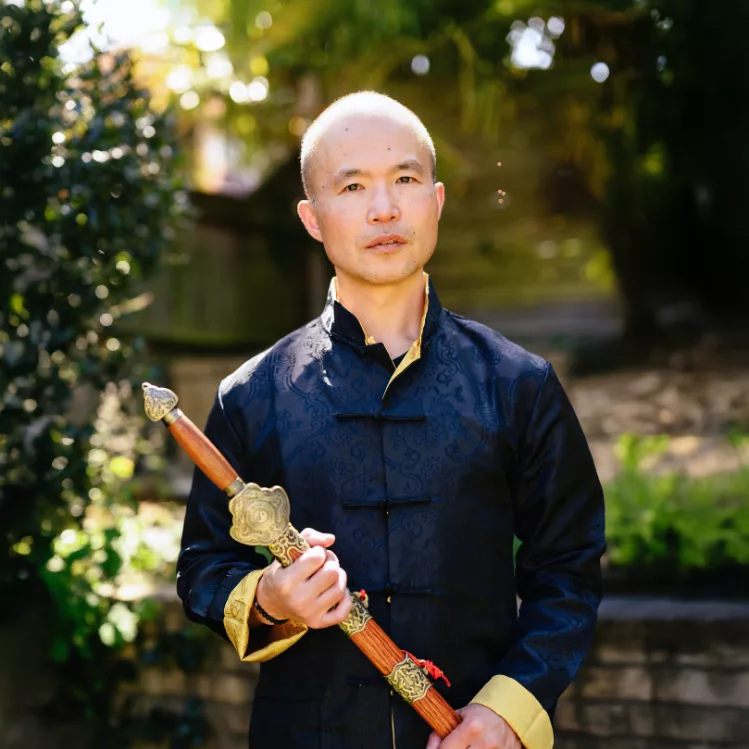
Mastering the Self: Dr. Jung Wing Wan’s Global Mission to Empower Leaders

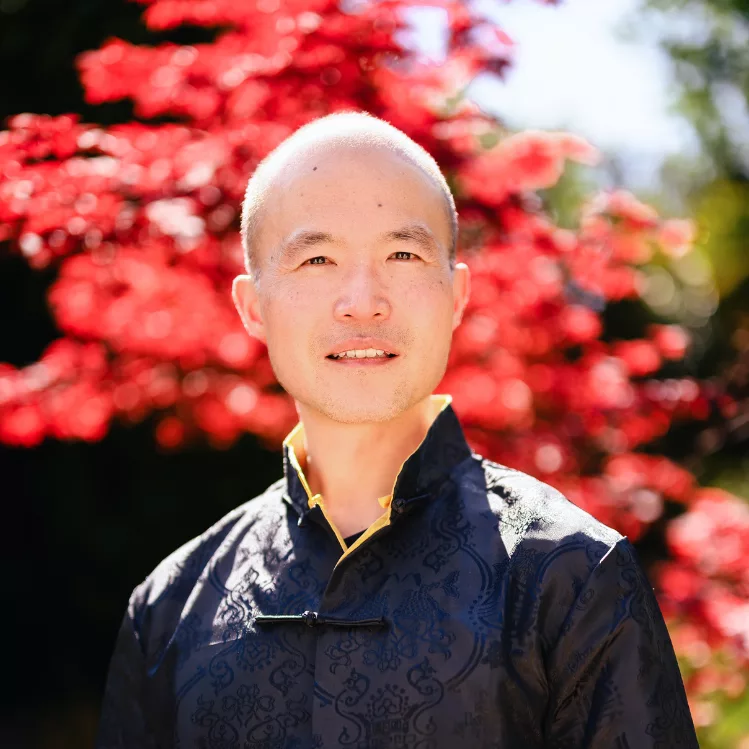
In a world where leadership demands constant evolution, few are as equipped to guide others on the path to personal mastery as Dr. Jung Wing Wan. With a career that spans the rigorous demands of the pharmaceutical industry, the discipline of martial arts, and a deep understanding of communication and philosophy, Jung has cultivated a unique framework for self-leadership. His Jung Personal Mastery Method has become a cornerstone for executives, entrepreneurs, and leaders around the globe who seek not just to lead, but to lead with purpose, presence, and wisdom. In this exclusive feature, we dive into the life and work of a man whose journey from scientist to speaker, from corporate leader to transformational coach, continues to inspire a growing community of individuals committed to unlocking their best selves.

You had a successful 25-year career in the pharmaceutical industry. What inspired your transition from that field into coaching and personal mastery?


The transition from a corporate career within the pharmaceutical industry to running my own company and coaching was a huge jump. 

One reason I made the jump was that I felt that the corporate career path did not suit me any longer. I came to realise that it had not been a great fit for a long while!

I have always had a leaning towards improving myself, whether to know more and to become more proficient in skills that would help me in my career. I realised that people talked a lot about leadership without describing what it was, and even less about how to develop better leadership skills. Early on in my career, I thought that I would develop leadership abilities by learning new skills, applying them. But something appeared to be missing. It was reflective of a mindset. Leadership was not about the title bestowed by your company, your manager or your colleagues or your CV. It was a personal choice.

I came across the work by Robin Sharma and was blown away by his message, including the one about leading without a title. It hit me that everyone can lead if they choose to, irrespective of a title or not. It was what I needed to start leading, irrespective of whatever label I was given – leader or not. His message, centred around personal mastery, was key to inspiring my more recent growth.

Alongside this, I have a passion for training in the martial arts. I have been practicing Taichi Chuan (Tai Chi) for over 20 years, among others. My practice combined the self-defence and combat, weapons, as well as personal wellness and mindfulness. There is the persistent theme of continuous self-reflection and striving for masterful improvement through disciplined practice. 

As I learned more about leadership, I began to share my newfound insights with colleagues, and mentored some of them as well. I realised that my growth within personal leadership was accompanied by a passion to help others with their growth.

My transition over to coaching reflected a leap in my own self awareness and conviction of the importance of personal mastery.

Can you walk us through the core principles of the Jung Personal Mastery Method?

Yes, absolutely. 

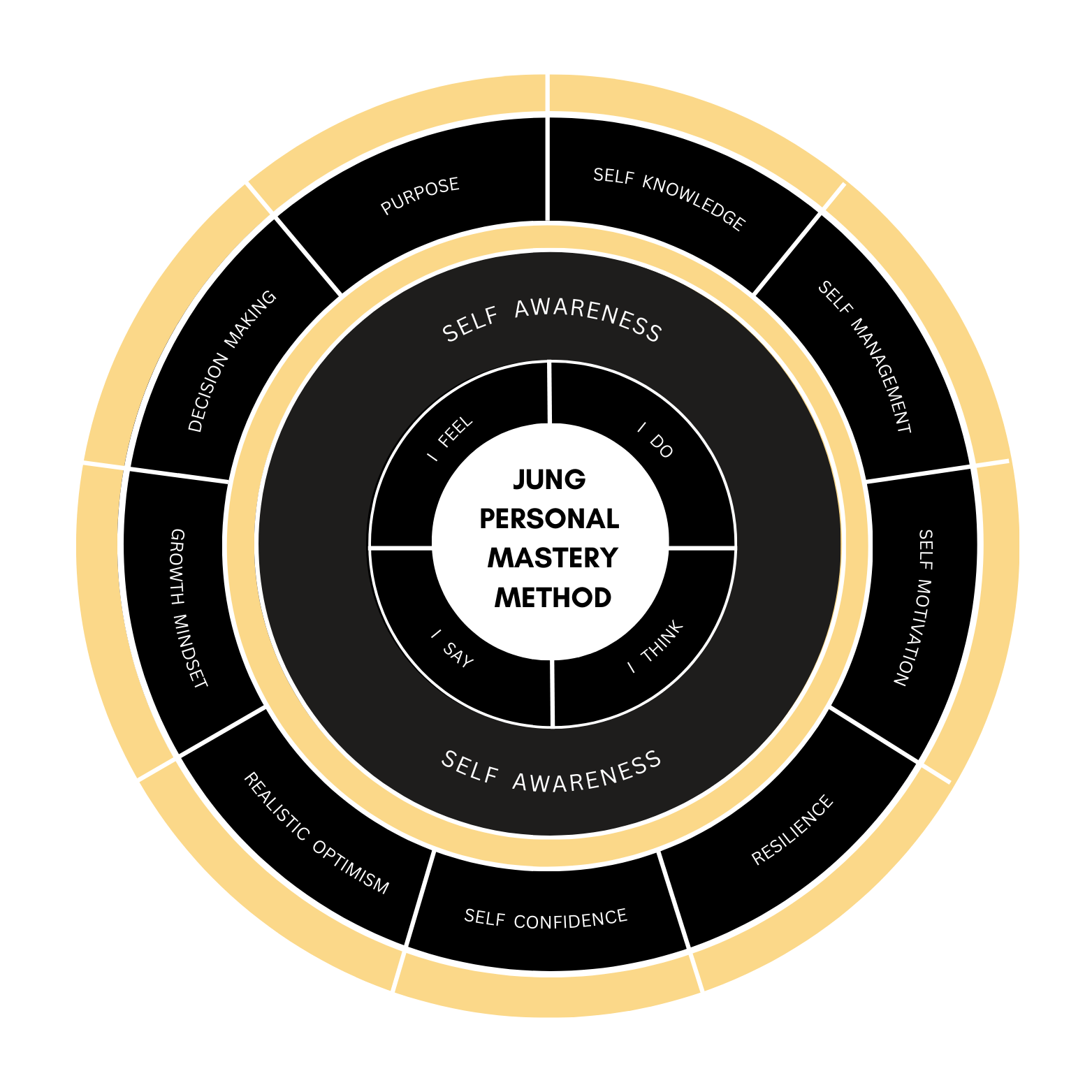
There are 10 pillars within the Jung Personal Mastery Method, which are grouped into four main stages.

Jung Personal Mastery Method c.png

1st Stage: Taking Back Control

Self-Awareness, Self-Knowledge, Self-Management

The key to making improvements in our ability to lead ourselves is to make sure we can manage ourselves so that we can be at our best. This requires looking at ourselves (Self Awareness), learning about ourselves (Self Knowledge), so that we can then look after ourselves (Self Management).

2nd Stage: Starting to Lead

Self-Motivation, Resilience, Self-Confidence

Being an effective leader requires a level of motivation to keep going, especially when we are met with challenges, failures and resistance (Self Motivation, Resilience). An effective leader of themselves and others also needs to have trust in their judgement and abilities (Self-Confidence).

3rd Stage: Winning more

Realistic Optimism, Growth Mindset, Decision Making

Becoming a more effective leader requires the attitude to always take proactive action; the learning mindset to improve and help others, and a reliable capability of radical decision making.

4th Stage: Finding Purpose

Purpose

Just being effective and efficient can feel empty were it not for having a sense of meaning and direction in what one does. Having a sense of one’s purpose (whether discovered or by choice) is all-important in framing what we do and who we are.

Can you share a transformational story from one of your clients that deeply impacted you as a coach?

One of my clients is someone whom I met at a Lisa Nichols event in LA a couple of years back. I recall saying hello to him as one of the few men in attendance, along with several hundred women. Before long, we realised we had a lot in common, even though we came from very different backgrounds. We shared similar values. He was and still is working for the US Navy. He wants to establish himself as a speaker and author to help others lead themselves to achieve greater things in life. Through working with me, he has developed his confidence in his message. He has been making steady progress in maintaining optimal health, physically, emotionally, mentally and spiritually. He is already finishing his book and learning from me on my own book-writing experiences. My work with this client is always a joy. I feel that the work with him shows me how important it is to help others through coaching to succeed. 

What are some common mindset shifts that you help your clients make to become more effective leaders?

A couple of mindset shifts come to mind.

One is taking intentional action. 

We often tend to inaction through overthinking. A course of action to move forward may seem very risky and illogical, yet it is only by making the next little step forward that we start to see things differently. No amount of thinking resolves challenges. I encourage my clients to take positive action, no matter how small.

Another mindset shift is that of moving from the constant fast pace of work to slowing down. Slowing down is counterintuitive to many of us in the fast-paced world we find ourselves in. Yet, it is by slowing down that we become more attuned to what is happening so that we can better refine and experience what is important and achieve in the long run. As my Taichi practice teaches me, you need to slow down to speed up.

How do you define purposeful leadership, and why is it so essential in today’s world?

I define purposeful leadership as always leading with intention, with a greater aim in mind. It means leading and striving by example as a way of being. It is also in the spirit of an aim that benefits others (not just oneself). It is to serve by taking responsibility. 

It is comparatively easy to learn new skills and collect certificates and accolades. It takes consistent application to develop through experience. It is this experience that is a source of wisdom that we all need and can help others with.

You speak several languages and have lived in different cultures. How do these experiences contribute to your coaching style?

I am indeed a bit like the proverbial magpie who collects shiny objects, which happen to be languages and cultural insights. 

These experiences give me a range of bridges to empathise with others across cultures and backgrounds. They remind me of the constant value of being curious and never judgmental. They remind me of the need to be humble and be a student whenever I am working with my coaching clients. 

You’re an avid runner, a callisthenics athlete, and you love Chinese cooking. How do you integrate these passions into your life and leadership?

I would say first and foremost, I am a martial artist who practices Taichi. This is a practice that emphasises intentional action amid ever-present change. My hobbies of running, callisthenics and cooking are like extensions of my practice. All require discipline and enhance self-discovery, self-awareness, including somatic awareness. Cooking for me embraces a cultural practice as well as orchestrating change to create a result – a bit like the study of chemistry (the study of change – which is the subject of my earlier PhD). There is also an aspect of play, because we can learn more through the experience of play.

As a Christian and elder at the church I attend, the integration of belief and purpose is never far away. I believe that regardless of one’s personal beliefs about the nature of our existence and the universe, I sense that we are at our best when we learn to use our talents and unique skills. I often bring in insights I have learned from these multiple angles into my coaching while being mindful of respectful of varied spiritual beliefs. 

What’s your vision for Jung Personal Mastery Ltd. over the next 5–10 years?

My vision for Jung Personal Mastery Ltd over the next 5-10 years is to grow a movement of people who lead with purpose and meaning for the benefit of humanity. 

I will also be an established author and speaker, sharing the message of personal mastery. Aside from the book that I have coming out in May 2025, I plan to continue writing.

If you could go back and give one piece of advice to your younger self at the beginning of your career, what would it be and why?

It would be to trust in yourself and be brave enough to ask for help!

Despite achieving on my own accord for as long as I can remember, I had an inner self-doubt. It was having an ever-present critic of myself. Rather than listen to this on face value, if only I had taken this as a signal to push through, who knows what version of myself I’d become! To ask for help at the risk of being rejected is a real character trait that can shift to radically different outcomes for us!

Jung’s book, called “Personal Mastery”, is out now (available on amazon.com). 

The cost of “being on all the time”

The unseen pressure of always being on

You are an entrepreneur. Your business is a reflection of you. You are rightly proud of what you have achieved and what you are continuing to do to spread the message about the value you bring to your clients. You are on the constant look out for opportunity. An opportunity to make a real difference to the bottom line for your business. Yet, you feel the compulsion to be ever present, always on. By feeling that you are always on, what do you gain and at what cost?

During a lot of my 25 year corporate career, I felt drawn into the prevailing company culture of being always on, being contactable at all times, to show my full commitment to what I did. I showed my leaning to be on time, hardly missing a meeting or being late with project delivery timelines. 

I did not even question this practice of being constantly on. I accepted it without hesitation, especially when I noticed that everyone else was doing it. Being called a “trouper” by US colleagues become a badge of pride even.

I did not know about the concept of boundaries. My unvoiced question was “What boundaries?”. To me the idea of admitting having boundaries seemed synonymous with “slacking”. No one wanted to be seen as the one who was less than 100% committed to their work, or showing a deficiency of professionalism.

The laptop and the mobile device we could take home with us was a trophy at the time of our apparent importance. Later I began to see it as more of a “ball and chain” rather than a productivity tool.

There were times I would take conference calls while on my driving commute or late at night. I had no idea of how productive I was, I suspect not much. Not to mention how safe this was to be on a conference call while driving through London traffic!

The reality is that there is a hidden personal cost.

What it is really doing to you

When you are constantly on, your mind is always on the alert. Even if there is no big existential threats round the corner in our relatively comfortable modern lives, our minds unconsciously do not always tell the difference. The accumulation of time being in a state of on, will lead to fatigue and decline in performance. You will find yourself feeling distracted, lacking focus. Without appropriate rest and recuperation, burnout, chronic fatigue and poor long term health lie in wait. That will have a knock on effect on your business and how it serves your clients. What is more that your relationships both personal and professional stand at risk of being affected. 

Reclaiming quiet

Have you ever had a computer or phone that became unresponsive? You think it developed a fault. What does the helpful technician recommend you do? They would ask if you have tried switching it off and on again! Sometimes it does actually work, even if the actual problem and how it developed remains a mystery.

So have you tried switching yourself off and on again?

If you are burning the candle at both ends, hardly resting, feeling mentally fatigued, what do you do to “switch yourself off and on again” during your working day?

There is a very simple tactic you can use.

Do absolutely nothing. Yes, that is right. Spend a moment doing absolutely nothing.

Doing nothing is like resetting yourself.

Realignment

How do you do this?

Very simple in reality. 

Turn off all devices within reach. 

Sit in a quiet space. 

Close your eyes. 

Breathe in and out slowly into your abdomen. 

Do this for a couple of minutes. 

Then open your eyes and stand up and move a little and return to what you were working on.

You are probably surprised that there is nothing particularly new or sophisticated. Does it need to be to work? 

Just as you would not expect to drive a car for thousands of miles nonstop without refuelling, without servicing, you would not expect yourself to keep performing without any reset or rest.

So do yourself a favour. Recognise that you do not have to always be on and choose to turn off. Your will be better for your business and the clients that it serves.

Meet the author
Jung Wing Wan, PhD, is a coach, speaker and founder of Jung Personal Mastery Ltd. 

With 25 years in the pharmaceutical industry and experience in over 30 countries, he now helps leaders cultivate self-mastery and lead with purpose. 

Drawing from leadership, martial arts and philosophy, he developed the Jung Personal Mastery Method to guide others toward lasting personal and professional growth.

The “Taking Back Control” course is in development, and you can be among the first 30 VIPs on the list.

Join the VIP waiting list today before the limited places run out!

Click the link here:

https://keap.page/dgm681/waitlist-course-taking-back-control.html


From Spice Girls to Red Carpets: Steve Vyse’s Style Reign

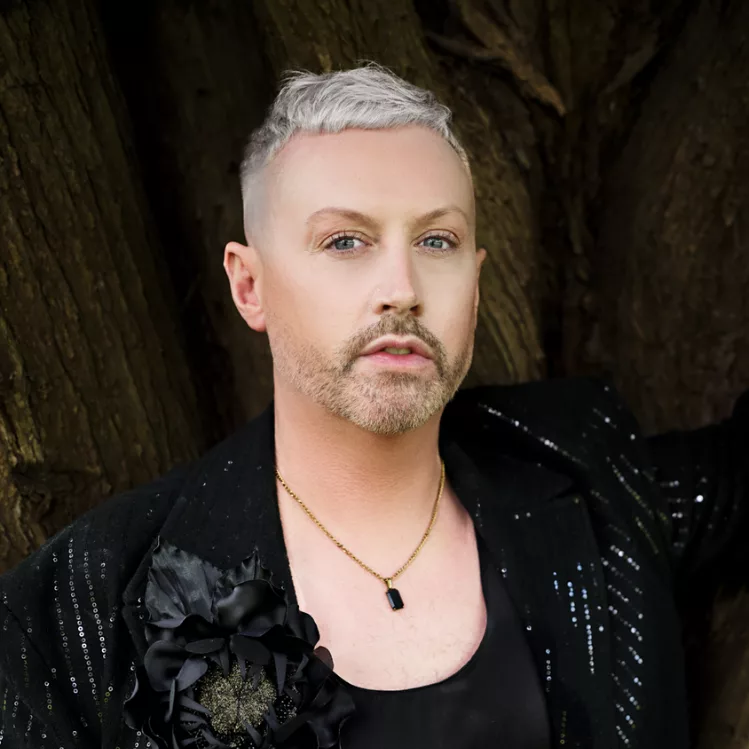
Before A-listers hit the spotlight, Steve Vyse has already worked his magic. The British celebrity stylist and fashion editor, known for his edgy-meets-elegant aesthetic, has quietly shaped the looks of Hollywood and UK’s elite—from Emma Thompson and Naomie Harris to the iconic Winstone sisters. Starting with custom T-shirts for Victoria Beckham in her Spice Girls era, Vyse’s career has evolved into a fashion force, now spanning red carpet styling, editorial shoots, and a buzzed-about design collaboration with Gaia Wise. As he steps further into the global spotlight, Steve Vyse is proving that true style influence doesn’t shout—it whispers, and the world listens.

Your career began by customizing T-shirts for Victoria Beckham during her Spice Girls days — how did that experience shape your path in fashion styling?

Growing up in the late 90s as a gay individual wasn’t without its challenges, but the Spice Girls’ empowering message of self-expression and acceptance gave me the confidence to be myself. I was fortunate enough to work with Victoria Beckham, creating a custom top for her. This opportunity snowballed, leading to more projects, including a fashion show at Heaven nightclub inspired by her iconic style. These early experiences not only honed my fashion skills but also instilled in me the courage to pursue my passion. Long before Victoria’s renowned design career took off, her influence had already sparked my own journey in fashion, shaping me into the person I am today. 

You’ve styled some of the UK’s most iconic celebrities, from Emma Thompson to Naomie Harris. What’s your approach to creating a red-carpet look that’s both personal and unforgettable?


I’ve had the privilege of styling some incredible talent, including Naomie Harris, for the Elton John White Tie and Tiara Ball, where she shone in a stunning red Temperley London gown. Although the event received limited press, one photo made it into OK magazine. I’m particularly fond of the look, especially with the elegant gold Mulberry clutch. Naomi’s poise and elegance made it one of my favorite styling moments.

I also love working on music videos, where creative control allows endless possibilities. Unlike red-carpet styling, which demands precision and spontaneity, music videos offer the freedom to experiment and refine. Recently, I had the opportunity to style legendary artist Crystal Waters for her music video “Dance Dance Dance.” It was a serendipitous moment, as I’d been listening to her hit song “Gypsy Woman” just days before her agent reached out. As part of the collaboration, Crystal Waters appeared on the cover of my magazine, Glam Week, and even performed at London Fashion Week with my friend Malan Breton. The experience was unforgettable, and I’m grateful for the opportunity to work with such an iconic artist.

What was the inspiration behind your fashion collection, MadLoveLondon, created with Gaia Wise? And how did collaborating with your best friend influence the design process? 

The inspiration behind my streetwear brand, Mad Love London, stemmed from a serendipitous moment during the pandemic when I met my best friend, Gaia Wise. After she accidentally spilled wine on herself, I lent her a Mad Love t-shirt, which sparked an idea for collaboration. Together, we designed a collection for the Pink Rainbow Foundation to support breast cancer awareness. Our partnership culminated in a powerful fashion show and a bespoke dress in memory of Gaia’s aunt, who had passed away from cancer. This experience not only showcased our creativity but also honored a meaningful cause.

Can you tell us about a styling moment that was particularly challenging or meaningful in your career — and how you navigated it?

One of my standout styling experiences was the “Battle of the Muses” shoot for Arthur and Albert, featuring Iris van Herpen and Jay Smith. The theme, centered around the Angel of Death, allowed me to tap into my creative depths. As a child, I was deeply inspired by Marvel comics, which instilled in me a love for bold, imaginative storytelling. This early fascination with comics has continued to influence my work, much like the iconic aesthetic of Thierry Mugler’s designs, and remains a significant source of inspiration for me.

What advice would you give to emerging stylists looking to break into celebrity styling and editorial fashion? 

Embracing your unique creative voice and perspective is key to achieving your goals. By staying true to yourself and your artistic vision, you can unlock your full potential and bring innovative ideas to life. Believe in your abilities and pursue your passions with confidence and determination.

Looking ahead, are there any upcoming projects or fashion ventures you’re particularly excited about that you can share with us?

I’m thrilled to share that I recently came second at the UK Top Influencer Awards, which is an incredible honor. Fashion has always been a huge passion of mine, and while I’ve made a name for myself in the industry, I’m now eager to explore opportunities in TV. I’m particularly excited about the idea of hosting a podcast where I can share my insights and experiences in fashion. It’s going to be an exciting new chapter, and I’d love for you to stay tuned for what’s next!

Credits

Photography – Desman Murray
Makeup – Jo Sugar using Haus Labs by Lady Gaga
Hair – Charlotte Karr & Barber King UK
Skin Prep – Dora Oakwood
Location – Capel Manor Gardens
Styling – Steve Vyse
Outfit – Phix Clothing
Footwear – Dune London


From £5 to a Marketing Powerhouse: Chris London’s Rise with 22:22

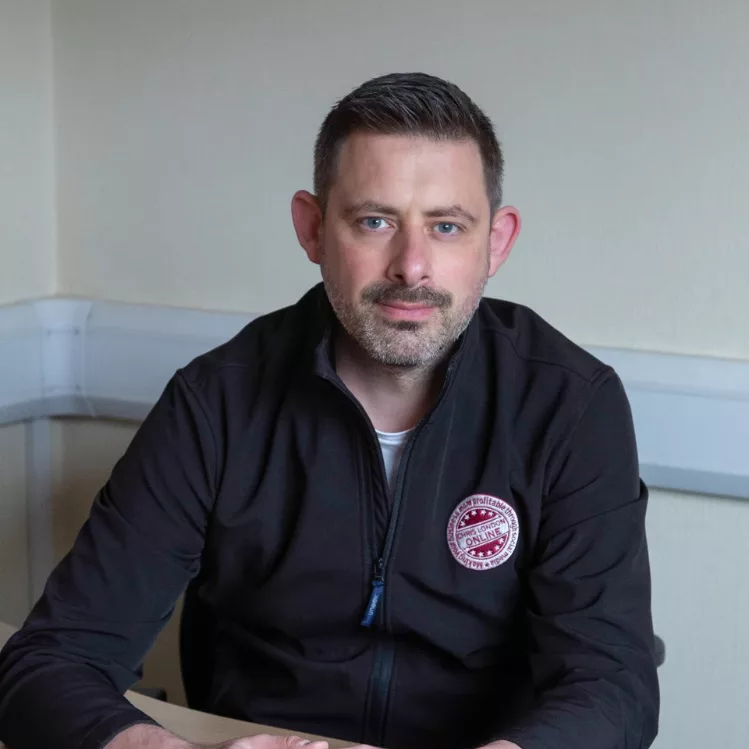
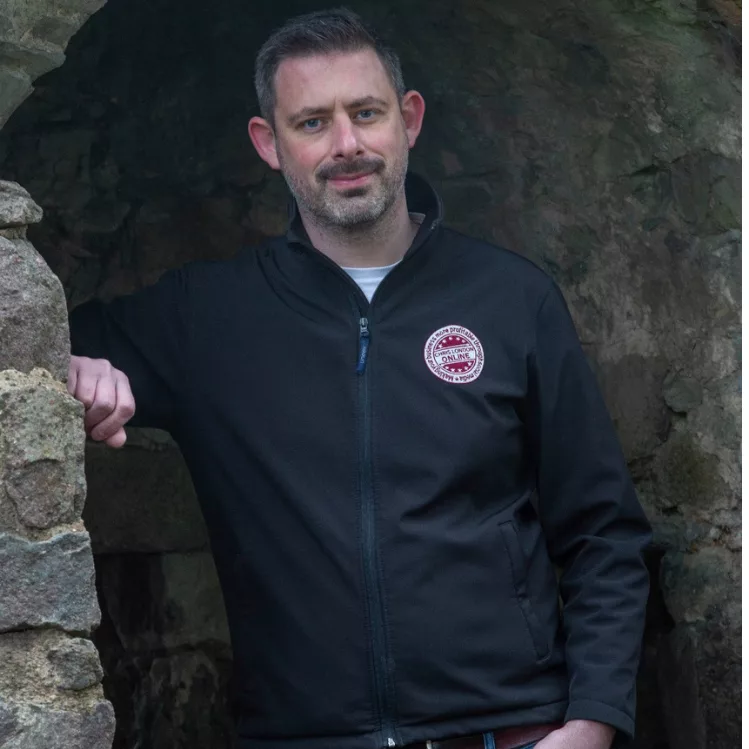
What can you really do with just £5 a day? For Chris London, that modest ad spend was the spark that ignited a full-blown marketing agency — one that’s now trusted by global brands and everyday entrepreneurs alike. As the founder of 22:22 Marketing, Chris turned trial, error, and a whole lot of grit into a proven system for growth. With over 18,000 digital products sold and a presence in top UK media, his journey is more than inspiring — it’s a masterclass in what’s possible when strategy meets street-smart execution.

Chris, you started 22:22 Marketing with just £5 a day on Facebook Ads. What made you take that first step, and how did you decide to test the waters with such a small budget?

I didn’t have a choice but to start small. I didn’t have a big budget, and I was wary of wasting money. But I also knew I had something worth selling, so rather than sit on it, I tested it. £5 a day was manageable — low risk, but enough to get real data. And once I saw it working, I just kept going, tweaking, learning and scaling. That’s how it all started.

Your journey from a small-scale experiment to selling over 18,000 digital products is impressive. What were some of the biggest challenges you faced in those early days, and how did you overcome them?

Fear and information overload. I was worried about burning cash, and there’s so much conflicting advice out there. But I committed to learning properly — not guessing. I tested everything. I paid attention to what worked, and ignored the fluff. Most of all, I didn’t give up when things didn’t work first time.

You’ve been known to cut through the jargon in digital marketing. In your experience, what is the biggest mistake businesses make when it comes to paid ads, and how can they avoid it?

They expect the ads to do everything. But ads only work when the offer, targeting, and landing page are aligned. People throw money at ads without getting the basics right first. I always say — the ad is the driver, but if the destination (your website or form) is off, it won’t convert.

22:22 Marketing now works with sole traders, SMEs, and global brands. How do you tailor your strategies to meet the needs of such diverse clients?


We listen. Whether you’ve got £5 a day or £5,000 a month, the principles are the same — it’s about being seen by the right people, consistently. We treat every client’s budget like our own, and we adjust the strategy to what actually makes sense for their size, goals, and industry.

In addition to paid ads management, your agency offers coaching and consultancy services. What’s the most important piece of advice you give to business owners who are just starting to use paid ads?

Start small and get clear. You don’t need a huge budget, but you do need clarity on who you’re targeting and what you’re offering them. If you don’t know that, no amount of ad spend will fix it.

Your expertise in social media and paid ads has led to media coverage and interviews on over 400 radio stations. How has this level of exposure impacted your business, and what lessons have you learned from it?

It’s helped build credibility and opened doors to bigger opportunities. But the biggest lesson? Stay grounded. Exposure means nothing without delivering results. So I always bring it back to what matters — helping businesses grow with the tools that work.

You emphasize building visibility strategies that lead to growth. Could you share an example of a campaign you ran that exceeded expectations and why it was so successful?

One that stands out is a client campaign where we helped them generate £1,036.40 in sales from just £61.56 ad spend on Facebook. That’s a 16.84x return on ad spend.

This is proof you don’t need a huge budget to get serious results. £61.56 isn’t a massive investment, but with the right strategy, targeting and creative, it worked. And that’s exactly what we specialise in — making small budgets go a long way.

We don’t just run ads. We look at the whole picture and make sure every penny works hard. Once you know what’s possible at that level, scaling up becomes the next logical step.

How do you approach content creation and social media page management differently for small businesses versus large brands, and why do you believe this is crucial for success?


For small businesses, it’s about personality and visibility. They need to show up consistently, sound human, and build trust. For bigger brands, it’s more strategic — structured campaigns, brand tone, layered messaging. Both need clarity, but the execution is different.

With so many platforms like Facebook, Instagram, LinkedIn, and TikTok, how do you determine which one is best for a business’s specific goals, and how do you balance efforts across multiple platforms?

We always start with the audience. Where are they hanging out? What are they doing there? There’s no point pushing content on LinkedIn if your ideal client is scrolling Instagram at night. Once we know where the attention is, we focus efforts there first, then expand once the basics are performing.

You’ve grown 22:22 Marketing from the ground up. What advice do you have for aspiring entrepreneurs looking to build their businesses in the marketing industry?


Learn by doing. Don’t just take courses — run ads. Build campaigns. Make mistakes. Speak to real clients. And never pretend to know it all. Results speak louder than buzzwords. Keep it simple, stay honest, and focus on getting your clients a return.


Tony Brown: From Foster Care to CEO – A Journey of Resilience

From an uncertain childhood in foster care to breaking barriers in leadership, Tony Brown’s journey is a testament to resilience, determination, and the power of perseverance. Faced with racism, rejection, and hardship at every turn, he defied the odds to carve out a path to success. His story is not just about survival—it’s about transformation, proving that no matter where you start, you can rise, rebuild, and thrive.

Your early childhood was marked by separation from your birth parents and being fostered by multiple families. How did this experience shape your understanding of identity and belonging?


It was the 50’s and white people seen pushing a pram with a black baby were routinely abused. I arrived at an inconvenient time and as a result was fostered for the first 6 years, eventually with a white Dutch family. My time with them was idyllic and I had 2 older brothers who looked after me, I felt loved. Until the age of 5, I did not know that I was a different colour. Nowadays some do not agree with transracial fostering and adoption saying that it is detrimental to the child’s identity. My view is that love and a feeling of security are more important. Cultural mores can be learned later from a solid foundation. Without this start, I don’t know how I would have dealt with the trauma that came next

The moment in the bath at age five was a heartbreaking yet formative experience. How did that incident influence your perception of self-worth and resilience growing up?

When I was five, I was walking down the road when some children threw stones and me as well as racist abuse. It was a shock to the system, I was confused before it dawned on me that I was a different colour to them. I went home, got in the bath with some scouring powder and a brush, and tried to scrub the ‘colour’ off myself. Luckily, my foster mother came in and stopped me. She told me that I was loved, that those bullies were stupid, and that I was a different colour, but as good as anyone else.

Transitioning from a loving foster home to your birth parents’ household was a drastic change. What were the biggest emotional and cultural challenges you faced, and how did you navigate them?

The first point I would make is that people did the best they could with what they knew at the time, even if it was wrong. We are all a product of our backgrounds. I went from a secure, loving home to a brutal, vicious one. I was hurt, both physically and mentally. I was torn away from a safe environment and put into one where I was scared, and beaten regularly with a belt. This was for not acclimatising quickly enough to different foods, or not understanding my father’s broad patois. It was all too fast, my life felt turned on its head. My father was particularly impatient, strict and brutal, with both myself and my mother. It was only later in life that I came to understand that hurt people hurt people. 

I started primary school and was severely punished if I did not come top of the class if I came home with dirty shoes, or bleeding because I had been bullied. My father’s response was to send me out to fight the bullies and get another beating from him if I lost. I know that was his way of trying to toughen me up in what he saw as a vicious, racist world where he could see nothing good.

You proved your academic abilities despite the negative assessment from your headmaster. How did that early criticism impact your motivation and drive for success? 

I shamed my father still further by failing the 11 plus exam. Furious, he went to my headmaster’s house demanding an explanation as to how this could have occurred. My headmaster responded that I was ‘bright, but not intelligent’, words that infuriated him and impacted me for years. As a result, I was sent away to boarding school. Although I was the only black boy in the school and there was some more bullying, it was a relief to get away from home.

In my first year, I won three academic prizes and I discovered an enjoyment in learning as I could lose myself in it. I was also proving to myself that I was not as stupid as my father and former headmaster had led me to believe.

Racism and discrimination play a significant role in your education and career. What coping mechanisms or strategies did you develop to persist despite these obstacles?

I am always interested in what makes people tick (including me), which is why I did a Psychology degree after leaving school. That was quite a triggering experience as I learned about eugenicists who have a particular view of the world and categorise people according to race and ‘IQ’. It brought back the words of my primary school headmaster who was probably schooled in this line of thought. 

When I was 15, and still at school, I was put on anti-depressants and kept on them for the next 45 years. It is only with hindsight that the role race stereotyping had to play in my treatment became clear. Once a label is applied, even incorrectly, the system, be it education, medical, financial, or penal, is difficult to shift and you are treated accordingly. 

After leaving university I wanted to use my degree in the field of advertising and market research which fascinated me. However, I found myself homeless and jobless. I was escorted out of my local authority housing office by security after being told I was not ‘priority homeless’, and therefore ineligible for housing. Fortunately, after a while, I got together with some other homeless people and set up a short-life housing cooperative which put a roof over my head. 

After numerous applications and interviews with advertising and market research companies in the early eighties, the boss of one of them took me out for a drink. He said I had the right attributes to be an Account Executive, but he could not appoint me because if his clients were prejudiced, he would lose business, and he could not take that risk. He advised me to look for work in another sector. 

One day I went to ‘sign on’ at the Unemployment Benefit Office and was told they had a job for me – on the other side of the counter as a clerk. After a year and a half of trying to understand the labyrinthine benefits system which appeared to be designed to confuse, I found a job advising homeless people, before getting my first job as a Housing Officer with a local authority. Again, I saw a complicated hierarchical system designed to confuse and run by people who had not experienced homelessness, or social housing. 

I naively made it my ambition to climb the greasy pole as quickly as possible to change things. (Be careful what you wish for). I gained the professional qualification and eight years later after 5 promotions was appointed at 34 as the first black Director of Housing with responsibility for 22,000 properties, 500 staff and a multi-million-pound budget. To get there, I had upset successive bosses, (with one exception), who tried to put me off saying I was moving too fast and not ready for the next step. I had upset some because I would not conform to ‘identity’ politics, and others who were racist. One boss in a management team meeting asked me what it was like to be a ‘N’ word. I looked around the table and saw that everyone was studying a microscopic dot on the table when I called him out on it.

One thing I learned from all this is when to pick your battles, and when to bite my tongue. What I found at the top was that every day there were people subtly, or blatantly working against me. I grew eyes in the back of my head and focused on results. Knowing that I would be judged on these I took the department from the bottom to the top of the government league tables. It was stressful. I coped by getting up and running at 5 am and on occasions drinking too much on top of the anti-depressants. At the time I was in an unhappy marriage and things piled up. Inevitably, divorce came next. The judge lowered her glasses and gave 90% to the other party. At the same time, the political administration which had been ‘hung’ for 4 years with ‘no overall control’ changed. Time for retribution, after 7 years in the role I was out of a job, and homeless again. 

Your career journey was filled with resilience, from unemployment to leading housing initiatives. What lessons did you learn about perseverance and adaptability along the way?

I learned that there are some good people in the world, to balance out the others. It’s important to keep an open mind and know that you are not going to be everyone’s cup of tea. There will be as many who gravitate towards you as want to bury you. If you keep going doors you never thought would open do, and treat others as best you can, even when they disappoint you. Don’t waste time on vengeance, it sucks your energy. Karma has a way of fixing things, don’t bother doing it yourself. Focus on the end goal. If you lose focus, refocus on the big picture and find purpose in this.

Hitting rock bottom on Christmas Eve 2011 was a pivotal moment in your life. What shifted in your mindset after that experience, and how did you begin rebuilding?

I had several good years as a consultant after my divorce and job loss. I built my way back into solvency, bought a house, and was in another relationship. Then came the 2008 crash and the contracts dried up. By Xmas Eve 2011, I had sold the car, and there was a pile of unpaid bills, disconnection notices, and court dates relating to repossession. There was no food in the fridge, and the person who had been living with me for the past 6 years decided to leave.

I could hear an Xmas party going on next door with Slade’s song blasting through the walls. I had had enough, I had no money and could not see a way out. What I did have was a stash of anti-depressants collected over the years and a couple of cheap bottles of wine. I ran a bath, got in and took swigs of wine between swallowing mouthfuls of pills, intending to never wake up again.

However, I woke up in a locked psychiatric ward in a hospital with no clothes, money or phone, sectioned under the Mental Health Act. I was heavily sedated, but the medics decided that my depression was so intransigent that something more was needed – Electro-Convulsive Therapy (ECT). They strapped down my arms and legs, put an appliance around my tongue to prevent me from choking on it, injected me, and proceeded to administer the shocks. 

I was told I could not leave until they said I could, and I had no way of contacting anyone to let them know I was there. Fortuitously, I saw an old computer in the corner, went on Facebook and in my drugged-up state recognised the name of an old school friend who I had not seen for about 30 years. I messaged him and instead of deleting, as most would, came and got me out.

On my release, my GP at the time was a wonderful lady who wrote to all my creditors explaining what had happened and bought me some time. A former work colleague (to whom I am now married), turned up on my doorstep – after being told not to come. After a while we got together and I sold my house. We decided to invest in property, went on a course, got a coach and moved up north where property was cheaper. 

Over time, I developed serious back pain – slipped disc, sciatica and arthritis and was taking Tramadol and Gabapentin, very strong painkillers for this. I then developed a prostate issue and ended up on the floor screaming with pain, unable to urinate. I was taken to the hospital where they undertook a very uncomfortable procedure to facilitate this, arranged a biopsy, and gave me more pills. By now I had a pillbox which had my 24 daily pills sectioned off into morning, noon and night.  I asked the doctor what would happen mixing all these different pills and he did not know.

Our property coach was an other-worldly type of person who was into holistic health, mind over matter, and could bend spoons with his mind like Uri Geller. He advised me to stop taking the pills and sent me to see a friend of his who was a kinesiologist. I took my pills to him and he told me that my body did not like any of them. He gave me some vitamins and minerals and I stopped all the medication

DO NOT DO THIS. GET YOUR DOCTOR’S ADVICE!

I spent 2 months shaking, sweating, hallucinating and feeling like I was going crazy. I rang the kinesiologist back and told him I could not do this and that I needed to go back on the medication. He advised me to get some colonic irrigation to flush my system out quicker. I took his advice and fortuitously the lady who undertook that procedure asked me if I had ever tried Bioresonance. I said I had never heard of it and she gave me the card of a practitioner.

First, he gave me some therapy before my first biopsy, after which the Consultant said he was not sure what was going on but booked me in for a further biopsy in a few weeks. I had some more Bioresonance and after that, the Consultant said that the good news was that I did not have cancer and that he was discharging me. I was delighted with this and went back to the Bioresonance Practitioner and asked if he could fix my back. I had several more sessions and the pain went. I went back to the gym, lost 2 stones, and regained my life.

I was delighted and asked him why more people did not know about this. I then told him we did not want to invest in the property anymore, to get me a Bioresonance device and teach me everything he knew.

The introduction to meditation and metaphysics through your coach marked a new chapter in your journey. How did these practices influence your healing and personal growth?

I realised that there was more to life than that which can be seen with the naked eye. The mind/body connection became so much clearer, as did the effect of our lifestyles, diet, exercise, sleep, hydration and stress – all pillars of the foundation of natural, holistic health. Since then every day has been a school day learning about the root causes of what makes people ill in our technologically advanced society

There have been terrific advances in medical science which are fantastic for emergencies such as accidents, surgery, stem cells and reconstruction. However, as a society, we are over-medicalised and need to focus on holistic methods before moving onto more intrusive pharmacological ones. In future, I hope for an integration of the best of both, it’s not an ‘either/or’ approach.

You have faced financial, emotional, and physical struggles throughout your life. Looking back, what do you believe was the key factor that kept you moving forward?

Focusing on the bigger picture, the result. To do this I have focused on a purpose. At one point it was homelessness, and while I still have input in that area, my main purpose now is health. Currently, in the UK there are now 2.8 million people off work sick. The psychological, physiological, emotional, societal and financial impact of this is massive. 

I would also confess to an element of stubbornness mixed in with the resolve. I don’t like to see injustice, suffering, greed, and indifference.

If you could offer advice to someone currently struggling with depression, financial hardship, or identity crises, what would you say to them based on your own experiences?


Find the root cause first. Depression has an origin, and it’s not a chemical imbalance. People experience trauma at some stage in their lives and carry it. At some stage, it pops out and manifests in one way or another. This then impacts all other areas of life. Sometimes financial hardship is linked to a feeling of not being worthy to have financial stability or abundance, which can be linked to a lack of self-worth. Identity can be linked to how others see us rather than how we see ourselves, or we might internalise others’ perceptions more than our own. It is often easier to go with the crowd rather than forge our path and our own identity, and this takes work. However, I return to the point I made earlier which is that you cannot be everyone’s cup of tea, just be your own.

Volker Jaeckel: The Mastermind Behind Business Growth & Marketing Excellence

In today’s competitive business landscape, success demands more than just expertise—it requires passion to take on things head-on, strategic leadership, innovation, and a results-driven mindset. Volker Jaeckel, a German native and Certified Business and Executive Coach practicing in the U.S. has built a 40-year career helping businesses and leaders navigate complex markets, optimize performance, and achieve sustainable growth. Backed by certifications from FocalPoint International, Brian Tracy International, the American Marketing Association, and the Digital Marketing Institute, his expertise spans small businesses to Fortune 500 firms across industries like pharmaceutical, chemical, manufacturing, automotive, advertising SaaS, and consumer products. With a proven track record in sales leadership, marketing strategy, and organizational transformation, Volker empowers executives, leadership teams, and businesses to maximize their potential, increase sales, resulting in accelerated revenue, and spearhead with tenacity and confidence in any rapidly evolving market.

You emphasize the importance of FocalPoint’s time-tested methodologies in your coaching approach. How do these strategies specifically help entrepreneurs and leaders overcome their toughest business challenges?

FocalPoint’s coaching strategies, rooted in the transformative principles of Brian Tracy, empower entrepreneurs and leaders to identify their biggest obstacles and resolve them systematically. At its core, FocalPoint operates on Tracy’s belief that clarity, focus, and goal-setting are the cornerstones of exceptional achievement. These time-tested principles help clients confront challenges by breaking them down into manageable, actionable steps.

For example, entrepreneurs often face overwhelming complexity in managing multiple priorities. Through FocalPoint’s unique clarity exercises, we help them pinpoint their highest-value activities – the 20% of actions that yield 80% of results. Leaders struggling with team dynamics are guided through behavioral analysis tools like DISC assessments, which uncover individual and team strengths, fostering harmony and boosting productivity.

What sets this methodology apart is its relentless focus on measurable outcomes. By teaching clients how to track progress using KPIs and results-driven action plans, FocalPoint ensures that challenges aren’t just addressed – they’re conquered. The connection to Brian Tracy’s philosophies ensures that each strategy is timeless, adaptable, and proven across industries, empowering clients to achieve sustainable growth and balance.

FocalPoint isn’t just about problem-solving; it’s about building a roadmap to excellence, leaving no room for guesswork.

As a DISC Behavioral Expert, how do you incorporate DISC analysis into your coaching sessions to help business leaders align with their natural leadership styles?

As a DISC Behavioral Expert, I integrate DISC analysis into coaching by helping leaders uncover their inherent strengths and understand how their behavioral tendencies shape their leadership style. Through my “Communication Breakthrough Program,” which I also deliver as an Affiliate Coach for California State University and the School of Entrepreneurship, I guide participants to embrace their unique traits while bridging communication gaps within their teams.

The process begins with each leader completing a DISC assessment, a tool designed to provide a comprehensive view of their dominant behavioral style – Dominance, Influence, Steadiness, or Conscientiousness. During the three-hour debrief session, we analyze how these traits influence their decision-making, conflict resolution, and interpersonal dynamics. By understanding their natural tendencies, leaders gain insights into how they interact with others, adapt to challenges, and communicate effectively.

For example, a leader with a high Dominance (D) profile may excel in driving results but could benefit from developing empathy when working with more collaborative team members. Similarly, an individual with a high Steadiness (S) style might thrive in nurturing relationships but may need strategies to navigate high-pressure situations. By tailoring coaching to these nuances, I help leaders align their behavior with the needs of their teams and business goals.

DISC analysis is more than a diagnostic tool – it’s a transformative framework for improving communication and leadership effectiveness. When business leaders align with their natural style and learn to flex into other styles as needed, they foster stronger relationships, resolve conflicts faster, and lead with greater confidence and purpose.

Can you share more about your “Entrepreneurial Growth Course”? What are some key takeaways that participants gain from the course, and how does it help them grow their businesses?

The Entrepreneurial Growth Course is meticulously designed to empower business owners and leaders with actionable strategies and tools to elevate their enterprises. This comprehensive program encompasses eight group sessions, each lasting 60 to 90 minutes, focusing on core areas such as business growth strategies, leadership development, and financial planning.

Key Takeaways from the Course:

Foundational Business Knowledge: Participants gain a deep understanding of essential business principles that serve as the bedrock for long-term success.

Strategic Planning Skills: The course equips entrepreneurs with the ability to craft and implement clear, actionable strategic plans tailored to their business objectives.

Key Metrics & Business Dashboard: Attendees learn to develop tools and metrics to monitor progress, facilitating informed decision-making.

Customer Clarity: The program provides insights into identifying target customers, understanding their needs, and effectively addressing them.

Resonant Marketing Messages: Participants are guided to create marketing messages that align with their growth goals and resonate with their audience.

By the culmination of the course, entrepreneurs are equipped with actionable insights and a clear roadmap for scaling their businesses. The program emphasizes practical application, encouraging participants to apply course lessons directly to their operations.

In your “Communication Breakthrough Program” at Cal State University’s School of Entrepreneurship, you teach the Platinum Rule. How does this rule differ from the Golden Rule, and how can entrepreneurs use it to transform their teams and organizations?

The Platinum Rule fundamentally…..While the Golden Rule advises treating or speaking to othersas you wish to be treated, the Platinum Rule takes it further: Speak and treat others as they wish to be treated or spoken to.

This distinction recognizes everyone has unique preferences, communication styles, and motivations that must be understood and respected to foster meaningful connections.

In the “Communication Breakthrough Program,” I teach entrepreneurs how to leverage the Platinum Rule through DISC behavioral analysis. By understanding the DISC profiles of their team members – whether they’re Dominant, Influential, Steady, or Conscientious – leaders can tailor their communication and leadership approach to resonate with each individual’s natural tendencies. For example:

A leader adopting the Platinum Rule might approach a high-D team member with direct, results-driven language while engaging a high-S colleague with patience and reassurance.

Instead of a one-size-fits-all leadership style, they create environments where employees feel valued and understood, leading to higher engagement and productivity.

The Platinum Rule is the rule of the future because it aligns with the evolving workplace dynamics that demand inclusivity, emotional intelligence, and adaptive leadership. Entrepreneurs who embrace it transform their organizations by fostering stronger relationships, reducing conflicts, and creating collaborative teams where diversity of thought thrives.

This approach doesn’t just improve communication; it creates a culture of respect and innovation. Entrepreneurs who lead with the Platinum Rule position their businesses for sustained growth and success in a world where understanding and personalization are paramount.

You mention helping clients “cut through overwhelm to find clarity” and “transform stress into strategic action.” Could you share a specific success story where you helped a business leader make these shifts?

Absolutely. One of the most impactful success stories I’ve had as a Business and Marketing Executive Coach involves a local law firm struggling to gain traction. Despite their expertise, they were caught in a cycle of running headlong without clear goals or direction, overwhelmed by ineffective processes and scattered marketing efforts. The result? Stagnant revenue missed opportunities, and growing frustration.

When I stepped in, the first priority was to diagnose the root of their challenges. Their marketing lacked focus, their lead pipeline was inconsistent, and internal alignment was virtually nonexistent. Through a combination of strategic goal-setting, detailed DISC-based team assessments, and a complete overhaul of their marketing strategy, we began to cut through the noise.

Here’s what we achieved together in just six months:

Doubling Revenue: By setting clear, actionable goals and aligning the firm’s resources, we shifted from reactive decision-making to proactive growth strategies. The team could now see and measure the direct impact of their efforts, driving a dramatic increase in revenue.

8X Inbound Marketing Leads: I revamped their marketing strategy by implementing streamlined, data-driven campaigns to attract the right clients. This resulted in an eightfold increase in qualified leads, giving them a predictable business pipeline.

Clarity and Strategic Focus: By creating a structured roadmap, we replaced their stress and chaos with clear priorities. They embraced weekly KPIs, allowing them to track progress, make real-time adjustments, and build confidence in their growth trajectory.

Expanding to a New Market: With their newfound clarity and resources, they could take the leap they had contemplated for years: opening a second business in another state. This move solidified their position in their original market and set them up for long-term scalability.

This transformation wasn’t just about numbers but about creating a culture of clarity, confidence, and action. By addressing their overwhelm and aligning their vision with strategic execution, the law firm didn’t just turn things around—they created a foundation for sustainable growth and expansion.

This story highlights what’s possible when strategy replaces stress and leaders commit to a clear path forward. If you’re feeling stuck or overwhelmed, let’s explore how we can achieve similar results for your business. Reach out to schedule a conversation and take the first step toward transformation.

You often help clients transform stress into strategic action. In your experience, what are the most effective techniques to help business leaders manage stress without burning out?

Stress is an inevitable part of leadership, but it doesn’t have to spiral into burnout. The key is transforming that stress into focused, strategic action that aligns with your long-term goals. In my experience, a few foundational techniques consistently make a difference for business leaders.

First, it’s about gaining clarity. Many leaders feel overwhelmed because they’re trying to do everything at once without a clear sense of what really matters. I often guide clients through an exercise to identify their top three priorities. By focusing only on the actions that directly contribute to their goals, they cut through the noise and eliminate unnecessary stressors.

Another significant shift is applying the 80/20 Rule. Leaders often waste time on tasks that have minimal impact. Assessing where their time is going is usually eye-opening. They can achieve far more with less effort by reallocating energy toward the 20% of actions that generate 80% of their results.

A strategic plan is also essential. Without one, stress tends to amplify because there is no roadmap to follow. A clear, actionable plan provides direction and reduces decision fatigue. When leaders know their next step, they can operate proactively rather than reactively, making all the difference in high-pressure situations.

Effective communication also plays a big role. This is where DISC behavioral analysis comes in. When leaders understand their own communication style and that of their team, they can tailor their approach to reduce conflicts and foster stronger collaboration. Miscommunication is a huge stressor, but DISC equips leaders to build rapport and resolve issues quickly, creating a more harmonious work environment.

Time blocking is another game-changer. Many leaders feel like they’re constantly “on,” juggling urgent demands while trying to focus on long-term goals. They can set boundaries and regain control over their day by scheduling blocks of time for focused work, team interactions, and personal recovery. This structure is often the missing piece for those feeling overwhelmed.

Finally, self-care can’t be overlooked. I remind my clients that recovery isn’t a luxury – it’s a necessity. Whether it’s a short walk, mindfulness practice, or simply unplugging for an hour, these moments recharge their energy and prevent burnout. Leaders perform at their best when operating from a place of balance, not exhaustion.

These techniques help leaders manage stress and turn it into a driver of clarity and action. When you’re able to approach challenges strategically, stress becomes an opportunity for growth rather than a barrier.

Building stronger teams through better communication is a key aspect of your coaching. How do you assess team dynamics, and what are some strategies you use to foster more effective communication within a team?

Building a strong team is like assembling a highly specialized platoon for a critical mission. In team dynamics, just as in the movie Saving Private Ryan, success depends on having the right people in the right roles and ensuring they communicate effectively. This is where the DISC Assessment becomes an indispensable tool.

When working with teams, the first step is understanding individual behavioral styles through DISC. This assessment gives a clear picture of each person’s natural tendencies—whether they’re results-driven (D), influential and people-focused (I), steady and reliable (S), or detail-oriented and analytical (C). Armed with this knowledge, I can identify the key players and their ideal roles, ensuring each team member is positioned to leverage their strengths.

For instance, high-D individuals thrive on taking charge and achieving results, making them ideal for leadership roles in high-pressure situations. On the other hand, a high-S person excels at providing stability and fostering collaboration, making them invaluable for maintaining harmony and continuity within the team. DISC allows us to pinpoint these traits, often hidden beneath surface-level interactions.

But team building doesn’t stop at assessment. The next step is fostering communication that bridges these different styles. For example, if a high-D leader tends to be direct and fast-paced, they might unintentionally overwhelm a high-S teammate who needs time to process and respond. By understanding these dynamics, we can coach both individuals to adapt their communication styles for mutual understanding – whether that means softening a directive tone or providing more clarity and time for feedback.

To solidify this, I often use real-world simulations and exercises where teams tackle challenges together. These scenarios not only highlight each member’s strengths but also uncover potential friction points. We then address these dynamics head-on, teaching team members to “flex” into other styles when needed and build trust through empathy and respect.

DISC also helps in assigning tasks that play to individual strengths. Just as the Captain in Saving Private Ryan knew who to send to scout, snipe, translate, or handle tactical situations, I help teams allocate responsibilities based on natural talents. This ensures that tasks are completed efficiently and team members feel valued for their contributions.

Ultimately, the goal is to transform a group of individuals into a cohesive, high-performing unit. With the right tools, like DISC, and targeted communication and collaboration strategies, teams work better together and achieve extraordinary results – even in the most demanding situations.

As a coach specializing in executive leadership, what do you believe is the most important trait for a leader to develop, and how do you help leaders cultivate this trait?

The most effective leaders demonstrate a blend of empathy, integrity, authenticity, and grit. These traits aren’t just personal qualities – they’re the foundation for creating trust, inspiring teams, and leading through challenges. Together, they form the backbone of exceptional leadership.

Let’s start with empathy, which has become indispensable in leadership today. Research from Ernst & Young in 2023 revealed that 86% of employees believe empathetic leadership boosts morale, while 87% say it’s essential for fostering inclusivity. Empathy allows leaders to understand the unique needs of their team members, anticipate challenges, and provide tailored support. Through tools like DISC assessments, I help leaders uncover not only their own behavioral styles but also the preferences and motivations of their team. This insight enables them to communicate effectively, adapt to individual needs, and reduce friction – all while building trust and psychological safety.

Equally important is integrity, which ensures that a leader’s actions consistently align with their words. Integrity forms the moral compass of leadership. It builds credibility, ensures fairness, and demonstrates accountability, especially in times of uncertainty. I work with leaders to identify their core values and teach them to align their decisions with these principles. When leaders act with integrity, they foster respect and loyalty within their teams, creating a culture where trust is non-negotiable.

Authenticity is directly tied to integrity but also speaks to the leader’s ability to show up as their genuine self. People gravitate toward leaders who are transparent about their strengths, admit their mistakes, and remain open to feedback. Authenticity fosters deeper connections and allows leaders to inspire their teams on a human level. Through coaching, I guide leaders in discovering their authentic voice – helping them lead not by emulating others but by embracing and refining their unique approach.

Finally, grit is the trait that keeps a leader moving forward when faced with challenges. Leadership isn’t without setbacks, and it’s often in these moments that resilience and perseverance shine. Grit is about setting long-term goals, staying focused, and having the courage to push through obstacles. I help leaders cultivate grit by developing clarity in their goals and creating actionable, measurable plans to achieve them. This clarity helps them stay grounded during tough times, knowing their progress is part of a larger vision.

Leaders who combine these traits elevate their teams and organizations to new heights. Empathy strengthens relationships, integrity fosters trust, authenticity creates connection, and grit ensures sustained success. These aren’t just abstract ideas – they’re skills that can be developed through intention and practice. Together, they transform good leaders into extraordinary ones.

In your work with clients, how do you ensure that the strategies you create for their businesses are sustainable for long-term growth, not just quick fixes?

Sustainable growth isn’t about quick wins but building a foundation that stands the test of time. When I work with clients, I focus on solving immediate problems and creating strategies that continue to drive results long after our coaching engagement ends.

A big part of that is clarity. Many businesses struggle because they lack a clear direction, jumping from one tactic to another without a long-term vision. My first step with clients is helping them define their ultimate goals and then reverse-engineering a strategy to get there. This approach ensures that every action they take contributes to something bigger, preventing the cycle of chasing short-term fixes.

Beyond strategy, execution matters. I embed systems into their operations – whether through process optimization, leadership development, or refining their marketing engine—so they can sustain growth without constantly reinventing the wheel. DISC assessments also play a role here, ensuring team dynamics align with long-term success. The right people in the right roles create stability and continuity, making it easier to scale.

But for me, sustainability isn’t just about structure – it’s about support. That’s where my personal philosophy comes in: “You’ll Never Walk Alone.” Just like the anthem sung at Anfield by Liverpool fans, this is my promise to every client who has ever worked with me. Whether they’re currently engaged in coaching or not, if they need guidance, clarity, or just a sounding board, I pick up the phone. No coaching fee, no invoice – just a commitment to their success. Because real business growth isn’t transactional; it’s built on relationships that last.

This approach ensures that my clients don’t just implement strategies for the short term—they develop the confidence and resilience to keep building, adapting, and thriving for years to come. They know they’re not alone on the journey, and that makes all the difference.

You co-authored a book with Joe Foster, the founder of Reebok. What was the most important lesson you learned from him that you apply in your coaching today?

The most important lesson I learned from Joe Foster is the relentless power of persistence and innovation, two qualities that define his story and how I approach coaching. Joe and I both admire Sir Winston Churchill, who famously said, “Never, never, never, ever give up.” That mindset was the cornerstone of Joe’s success and has deeply influenced my own philosophy.

Joe’s journey is a testament to persistence. Reebok wasn’t built overnight. The company underwent multiple iterations, from its early beginnings as a family business to its transformation into a global powerhouse. Joe’s decision to evolve the brand—from its original name to what we now know as Reebok—illustrates the importance of adaptability in business. He showed me that success isn’t about avoiding obstacles but about embracing them as part of the journey. That same persistence fuels me to encourage my clients to push through transitions and challenges, reminding them that setbacks are often set up for the next big opportunity. 

Another defining lesson from Joe is the value of innovation over imitation. Instead of replicating what others were doing, Joe saw the potential to create something entirely new. In the 1980s, he introduced one of the first women’s athletic shoes specifically designed for aerobics—a groundbreaking product that revolutionized the industry. This idea of challenging norms and creating solutions that didn’t previously exist is at the heart of my coaching approach. I don’t believe in regurgitating old principles or offering cookie-cutter strategies. Instead, I take proven concepts and reimagine them to fit each client’s unique needs. Like Joe, I believe that innovation is what separates leaders from followers.

Finally, Joe’s ambition to take Reebok Global resonates deeply with me. Breaking into the U.S. market was one of his biggest challenges, but his partnership with Paul Fireman in 1979 was a turning point that allowed Reebok to thrive internationally. As a coach, while I’m based in the U.S., my vision extends far beyond national borders. I’m committed to building a coaching practice with a global footprint, helping businesses and leaders around the world achieve extraordinary results. Joe’s success reminds me that a clear vision, strategic partnerships, and bold action can turn ambitious dreams into reality.

Joe Foster’s story is a masterclass in perseverance, creativity, and ambition—all qualities I aim to instill in the leaders and businesses I coach. His journey inspires me to lead with a “never give up” attitude, to innovate fearlessly, and to pursue a vision that transcends borders. These lessons don’t just stay in our book pages of “How to Survive and Thrive II” – they guide everything I do as a coach.

For someone just starting their entrepreneurial journey, what are the first three steps you recommend they take to ensure they are building a solid foundation for long-term success?

Starting a business is exciting, but it can also feel overwhelming without a solid foundation. The biggest mistake new entrepreneurs make is charging ahead without a clear direction. The goal isn’t just to start – it’s to build something that lasts. I always advise entrepreneurs to focus on three foundational steps that create long-term success: Clarity, Customer Understanding, and a Scalable Strategy.

The first step is absolute clarity on what success looks like – not just in financial terms, but in purpose. Entrepreneurs need to define their vision with precision. What problem are they solving? Who are they serving? Where do they want the business to be in three, five, or ten years? Without this level of clarity, every decision feels like a gamble. I often take clients through a vision-mapping exercise, helping them articulate their goals in a way that serves as a true north. When things get tough – and they always do—this clarity keeps them moving forward.

Next, know your ideal customer inside and out. Many entrepreneurs fall into the trap of trying to serve “everyone,” which leads to diluted messaging and wasted marketing dollars. Instead, success comes from deeply understanding a specific audience’s needs, behaviors, and decision-making patterns. This is where tools like DISC assessments come into play—not just for team-building but also for understanding client psychology. If you know how your ideal customers think, how they prefer to communicate, and what drives their decisions, you can craft a brand experience that speaks directly to them. The businesses that thrive aren’t just the ones with great products or services – they’re the ones that truly understand their customers and build deep relationships with them.

Finally, build a business model that scales, not just survives. Many entrepreneurs make the mistake of setting up a business that only functions when they’re personally involved in every detail. This is a recipe for burnout. From day one, entrepreneurs should think about scalability – creating systems, processes, and automation that allow businesses to grow without being wholly dependent on them. Whether setting up repeatable workflows, hiring the right team, or leveraging technology, the focus should always be building something that can run efficiently as it grows.

New entrepreneurs don’t need all the answers, but they need a strong foundation. With a clear vision, a deep understanding of their audience, and a scalable approach, they’ll set themselves up for success – not just for the next six months but for the long haul.

~Volker Jaeckel

Temecula, California

January 28th, 2025

The Authentic Edge: Andrew Eggelton’s Revolutionary Approach to Presenting

In a world where polished perfection often overshadows true connection, Andrew Eggelton is on a mission to bring a more profound level of authenticity to the stage. Growing up in the rural farmlands of New Zealand, his journey into the arts wasn’t mapped out with a clear purpose, but one thing was certain—acting and presenting were his passions. 

Over three decades, Andrew has honed a unique approach to presenting, one that transcends technical skills and dives deep into the heart of what it means to be truly present. In this exclusive feature, we explore how his philosophy of “energy is information” is transforming the way we connect with audiences, and how he’s helping presenters rediscover their most authentic selves. Ready to unlock your true presence? 

Andrew’s wisdom might just be the key.

Growing up in rural farmland in the South Island of New Zealand, how did your environment shape your early perceptions of creativity and expression?

When I first arrived in the farming area of Otaio in South Canterbury at age 5, there were only 8 kids at the school and my father was my teacher and headmaster.  

There was a lot of space, I could get lost in my imagination, creating imaginary characters to go on adventures, heading off early in the morning with a packed lunch to explore the endless fields, mountains and rivers.  In the 70’s and 80’s you knew it was time to head back to the house once the sun began to disappear.  It was a good time to be a kid.

In the cold winters, I would spend time in the neighbouring school room writing or watching films at home on VHS.  Comedies had the greatest impact on me, Monty Pythons The Holy Grail, Blazing Saddles and Airplane to name a few, I still remember how much my sides hurt from laughing.  These films shaped my humor as an adult and how I express myself from stage and camera now.  I can see that expressing myself through words has been there all along.  I would write long-winded, fun stories that my dad would let me read to the other children and seeing their reactions inspired me further.

Authenticity is at the core of your teaching. How do you define “true authenticity,” and why do you think it’s such a challenge for many presenters?

Authenticity is the thread I can trace throughout my career from day 1 to now, it’s the baseline of my teaching, not the end goal.  I learned to differentiate between ‘just be you’ and true authenticity while filming TV shows.  A director would often say “Andrew, just be you” and of course, I thought I was, but what they meant was they had a specific version of me they wanted, so in time I was able to ask them what version they needed from me, and it was rarely authenticity.

My value is in being able to teach back to other presenters what true authenticity feels like and then more importantly, a process to achieve it in the simplest way possible every time you need it and want it.   

Firstly, there’s the authentic self vs the conditioned self.  The conditioned self is the parts we’ve layered upon ourselves, to project for others to see.  There’s a lovely quote from Michelangelo when he was asked the question ‘How did you create David?’

He replied – “it was easy, all I did was chip away everything that wasn’t David”.

The best presenters have been able to chip away at everything that is not themselves and these things show up when we present, as projections.  We project what we want our audience to see and in most cases, a presenter will unconsciously project likeable, inspiring, smart and confident.  They’re false ideas we have of what we believe the audience wants and then we cater our external expression to them.  

You’ll find that an audience isn’t greatly moved by the act but instead feel greatly more by the purity of the act.  Energy is information.

Presenters have been sold a story that they need to be ‘more’ when on stage and it’s in this attempt to be more that they lose who they truly are.  They attempt to become who they think the audience wants to see; however, an audience doesn’t know what they want, they only know what they’ve seen before and it’s our job to bring something unique to the stage – and every single person is unique when the conditioned self is stripped away.  

If you look at many TEDx talks as an example, they don’t stand out from each other because each speaker is essentially a carbon copy of the last one, the hand gestures, facial expressions and movements far removed from the person they are at home, their range of expression diminished by the act they’ve created that fits their version of what a speaker should look like.  Their story may be different, but it soon gets lost in the standard way it’s delivered.  

You’ve spent over 30 years refining tools for presenters. Can you share an example of one of these tools and how it transforms someone’s presentation style?

I love this question.  I use a few powerful methods, in that they deliver immediate results.  One powerful tool I use is horses (equine-assisted training), and I know that sounds kind of weird but hear me out.  A horse reflects to you exactly how you’re being.  They’re the ultimate authenticity meter, highly sensitive, relational beings who thrive on connection – sounds like a presenter right?  They mirror our inner states and will show you without fail or care who you’re being or when you’re hiding behind a mask. It can be both brutal in its honesty and the most beautiful and powerful experience of your life.  Authenticity is a feeling so when you figure out what that feels like you can never go back.  

One other tool I use is a process that a presenter goes through to ensure that who they are off stage is seamlessly transitioned to who they are on stage.  This is step 1 of my methodology and is ‘no change of state’.  It shows a presenter that the magic today will come from who they are right now instead of wrestling with another version of themselves that they think will serve them better.  Each different state you’re in will influence another version of your truth, you’ll articulate it differently.  You’ll get new insights depending on what state you’re in – so today is always the day when the magic happens.  Ask yourself, when you’re presenting do you want certainty, or do you want to create magic?

In your experience, how has the art of presenting evolved over the years, especially in an era of digital platforms and virtual connections?

I look at this from my point of view of how much presenting has changed during the 30 years I’ve been in the arts.  From a craft point of view, my honest answer is, very little.  Presenting is still seen as an act and people aspire to be storytellers or wisdom sharers, but very few have the skills to curate a truly memorable experience.  

Most speaker coaches share technical tools that should only be, as most rules are, guiding principles.  We’ve ended up with so many cookie-cutter approaches to presenting with the majority trying to figure out what their story is.  I believe that if you’re good at your craft you don’t have to have a story to be memorable.

I talk about redefining what world-class presenting looks like moving away from the age of information to the age of connection, and making our presentations more impactful because they’re an external expression of our true inner world.  I want to see presenters build experiences and connections with their audience.

Experiences teach more than words and I think the question before you begin is, “What kind of experience do I want to have with my audience?”  Then the building blocks to create are easier to find and learn.  Maybe, you don’t even need a story. 

Although nothing beats an in-person experience we do now have the availability to build relationships, and connections and share virtually.  What a time to be alive, right?  In the past I used to fly anywhere I needed, to work with the best and now we have the option of not even leaving home.  The idea bores the hell out of me but it’s handy, enables a worldwide audience and I know others love it.

To begin with, people were taking TV presenting skills and directly translating that to Zoom or social media lives and it didn’t work, you’re not meant to barrel the camera for 5-10 mins at a time and speak like you’ve had 5 coffees, but this is progressing.  A rule of thumb is if you find your energy is depleted after a Zoom session or creating a video, you’ve likely been pushing it and moving away from what should be the most effortless delivery ever – ‘conversational reality’.

How do you envision the future of presenting and the role of authenticity in a fast-paced, tech-driven world?  

You can create change as fast as you want but some things stay the same and one thing is going to be connection.  People crave connection and something I’ve noticed now that we all have so much access to being ‘visible’ is that words without intention and authenticity lack believability and impact.  

You see this in my live events when someone first speaks, most of the time the audience isn’t moved, as though the words were empty, but with a little feedback the words feel more layered, they have more weight to them, as though they now have a little ‘you’ attached to them.

Your delivery attracts your audience so if it’s not congruent with you then prepare to attract the wrong kind of people.  I’m taking a punt that the busier we all get and the more ‘content’ that is put in front of us, the very best leaders will be the ones who can connect the most with their audience, teams and clients.  

If you could design a workshop for children to teach them the foundations of authenticity and connection, what would it look like, and why would starting young matter?

There’s a saying in TV and film – never share the screen with either a child or an animal because they both have the capability of stealing the show.  They’re both unpredictable, spontaneous and truthful and that’s glorious to watch when in action. 

Designing a workshop for kids is beyond my expertise, and while I ran one in 2015 it was my first and it was my last.  During the lunch break, I called in my mother as backup, who like Dad, was a schoolteacher and handled it with ease while I vowed never again!

One thing I would love young adults to be taught before they leave school is the different styles of communication people have, we’re all predictably different.  I know that learning this would make a world of difference in their lives and set them up in life to be more effective communicators. 

Over time we create the many versions of ourselves we believe the world wants to see, which ends up being the conditioned self.  Effectively that’s what I must undo when clients come to me.  Perhaps, It would be great if children weren’t taught to project to please, but how do we do that when it’s become so ingrained in our culture?  

Can you share a moment from your career when a client’s transformation deeply moved you or changed the way you approach your work?

It was at a retreat I ran in Portugal, we were doing a future pacing meditation exercise so the attendees could see what the greatest version of themselves looked and sounded like on stage.  I music producer had worked with me on a 12-minute track that elevated them via 3 separate peaks, the 3rd being the apex that really set them free from their current version of themselves.  I’ve learned to choose with intention how I want my words to sound, and how I want them to be received and felt.  I had practised it over the year while touring and was getting great results, but this one was the start of something different and unexpected.

This attendee really ‘went there’ and I could see he was going to need some space to come back and ground.  My assistant and I cleared the room and when the time felt right, I asked him what he had seen, through tears of joy his response was “I saw exactly where I’m going to be in 6 years and my family is going to be ok, I can see what I have to do next”.  

He was never going to approach another day the same after that experience and I began to trust that the work I was doing expanded beyond presenting.